

Thomas Søndergård stood in for this concert at a day’s notice – Valery Gergiev is apparently recovering from a knee operation and unable to travel. He left behind a curious programme, centred around Prokofiev’s quirky but dour Sixth Symphony. It’s a difficult work to schedule, but Gergiev added two sweeteners, Tchaikovsky’s Romeo and Juliet and First Piano Concerto. Søndergård clearly has the measure of all three works, and all came off well, making this concert, his first appearance with the London Symphony, an impressive debut.
Dynamism and focus are the key qualities of Søndergård’s interpretations. His tempos are generally fast, although he doesn’t shy away from rubato, and clarity of texture always takes precedence over dynamic extremes. That can sometimes be frustrating, especially in slow, quiet passages that are never allowed to relax, and in blazing, brass-capped codas that can feel underplayed. But the result is a valuable sense of coherency and a refined tonal palette, based on the impressive playing that Søndergård draws from every member of the orchestra.
There was just enough passion in the love theme, although no sense of abandon
Such details were apparent from the very opening of Romeo and Juliet, the rich sound of the mid-range woodwinds here setting the tone beautifully. Søndergård’s fleet tempos and dynamic restraint gave the music a directed, narrative quality. There was just enough passion in the love theme, although no sense of abandon. The only disappointment was the coda: the dynamics in the funereal music were too high and there was no sense of stillness, and the final climax, again even and steady, underwhelmed.
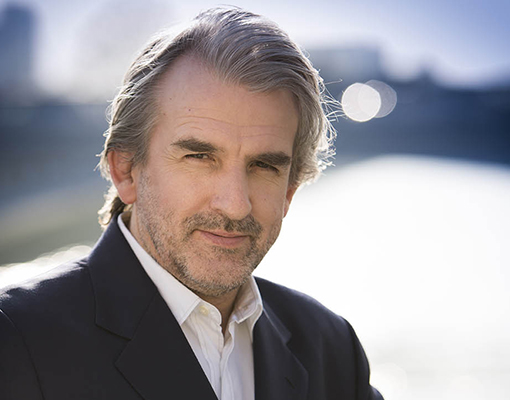
Barry Douglas (pictured below left by Eugene Langan) has a long association with the Tchaikovsky First Piano Concerto, going back to 1986 when he won the gold medal at the Tchaikovsky Competition with his rendition. Thirty years later, he is not complacent, and his reading this evening, while technically accomplished, was fresh and vibrant. Douglas has a definite but light touch, every chord cleanly articulated, but with plenty of nuance too, a blessing given Tchaikovsky’s often congested chord voicing. Søndergård is the ideal partner for Douglas’s Tchaikovsky, and the dynamism and detail the conductor drew from the orchestra perfectly complemented the pianist’s phrasing and tone. The slow movement was the highlight, particularly for the precise ensemble of the string pizzicatos and the lyrical beauty of the flute solo, perfectly carried over into the piano.
 Despite his late booking, Søndergård clearly has an intimate knowledge of Prokofiev’s Sixth Symphony, which he here delivered in an idiomatic but highly convincing reading. Listening to the mid-range woodwinds in the opening – their textures as clear as ever – the connections in Gergiev’s mind with Romeo and Juliet became clear. As in the Tchaikovsky, Søndergård sacrificed some atmosphere for the sake of flow and clarity. The result was a constructive tension between conductor and composer, with Prokofiev’s extremes of texture and dynamic continually reined in. But the focus on clarity and balance only served to heighten the sombre mood of the opening, and however much reserve Søndergård imposed, the fireworks that followed from the woodwind and brass had an electrifying effect. So too in the second movement, here taken a notch or two above the designated Largo, but with Prokofiev’s stark dissonances raising the tension in spite of the conductor’s reserve.
No such conflict, though, in the finale, the conductor’s approach here in perfect accord with the music’s vibrant, neoclassical profile. The orchestra, too, shone, particularly the brass soloists and the large but well-disciplined percussion section. Søndergård’s thorough knowledge of the work was a particular asset in the coda, with its erratic tempo changes and unpredictable outbursts. As ever, the conductor’s sense of control and proportion were evident, but the solid orchestral tone, combined with the focused drive directed squarely at the ending, brought an unforced logic to these final pages, the full intensity of Prokofiev’s symphonic statement now heard without a trace of restraint.





Add comment