

Amsterdam is a multi-faceted anti-fascist shaggy dog story, like Jules et Jim scripted by an off-form Thomas Pynchon. Though it falters in many major ways, David O. Russell’s not especially funny, tense or well-acted spiritual sequel to American Hustle is carried by an enviable cast and benign, off-kilter charm.
It's 1933, and Bert (Christian Bale) is a Catholic-Jewish doctor with a glass eye helping fellow traumatised Great War veterans in New York. His veteran best friend, lawyer Harold (John David Washington), asks him to autopsy their beloved commanding officer, whose daughter (Taylor Swift) suspects foul play, only for the pair to be framed for murder by the enigmatic Council of Five.
Flashback to 1918: Burt is a white officer in Harold’s black regiment, their bond made literal when their bodies are shredded by the same shrapnel burst. As they convalesce, nurse Valerie (Margot Robbie) spirits them off to an Amsterdam idyll of race-free love and Dada intent, where she makes Man Ray-like photos and burnt shrapnel sculptures. They tell each other what great friends they are, and we see it in the camera-swirl of a tango which feels like flying.
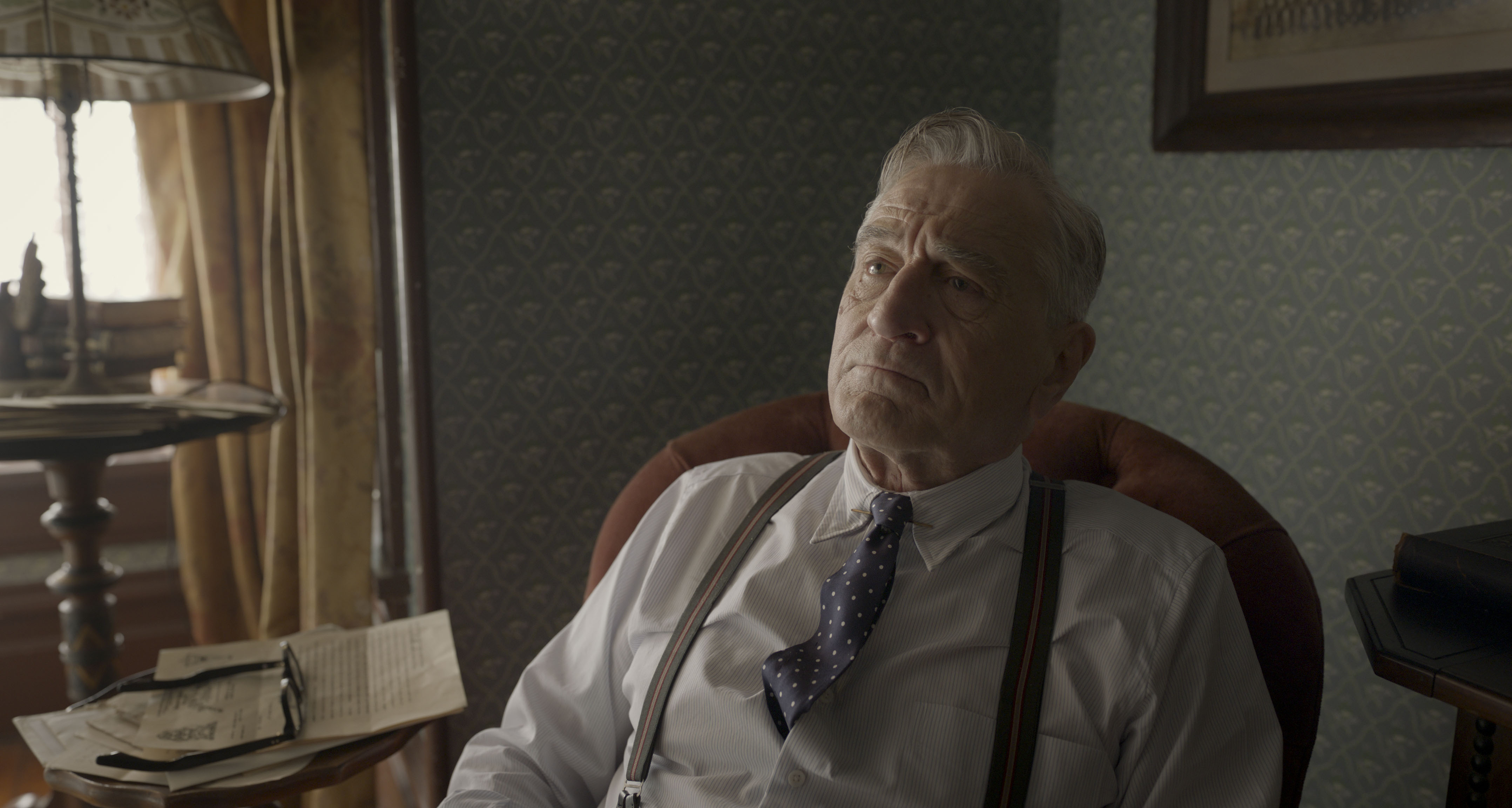
Back in ‘33, the vets meet Valerie again, her sparkle dimmed and body wrecked by her rich family’s dubious medication. Dimly perceiving a plot against America, the reunited trio seek answers from national Marine icon General Dillenbeck (Robert De Niro).
 Russell’s other initially baggy, discursive thriller American Hustle is the obvious comparison. But where its spring-loaded plot snapped satisfyingly shut amidst vertiginous twists, here the conspiracy’s truth becomes progressively plainer; the Council of Five recall the shadowy Golden Fang in Paul Thomas Anderson’s Pynchon flick Inherent Vice, but mix real fascist and capitalist plots against FDR. What passes for a third act doesn’t climb in tension but idealistic conviction, using past parallels to protest against Trump and America’s history of proto-fascist conspiracy. The outspokenly anti-Trump De Niro, speaking from close to his own heart, imbues his general with visceral nobility and barely contained disgust at these goons.
Hustle’s sexy disco Seventies setting is meanwhile swapped for a novel, diffuse backdrop of maimed Great War bodies, eugenics, Twenties liberty and looming fascism. Amsterdam stays at a simmer as it ambles and rambles through these themes, distractedly missing marks. Sometimes the whole cinematic spell falls away, Robbie delivering baffled exposition as if just handed lines, De Niro standing forgotten, waiting his cue.
Washington, who carried Christopher Nolan’s still more narratively impenetrable Tenet, flattens his performance into two dimensions. Even Robbie can’t sustain her effervescence (which her role mostly amounts to; like Tarantino, Russell seems too dazzled to dig deeper). Acting styles are experimentally paired, leaving Alessandro Nivola and Matthias Schoenaerts scrabbling for purchase on underwritten cameos; Michael Shannon and Mike Myers do better as odd couple spymasters, Shannon’s testifying intensity dovetailing with Myers’ underplayed comic timing, a rare resource here.
 Bale is the lightest, truest note. Prone to humourless heaviness from his rasping accents in, he gambols through Amsterdam. He loves Bert, borrowing from Stan Laurel and Columbo for this glass-eyed, quizzical, shambling innocent. Russell dreamt his film up over years of Santa Monica diner talks with his actor friend as sounding board, and even more than his director, Bale possesses its key.
This 2¼-hour, $80 million period film still often feels like a diner sketch. Amsterdam is a failure if all you want is success, misfiring in some of the ways David Robert Mitchell’s baffling conspiratorial bomb Under the Silver Lake did. Its most coherent element is Emmanuel Lubeski’s cinematography, which bestows a soft, yearning glow. The blood failing to pump through the connective veins between script and screen may explain the couple who walked out of my screening, and the few more who began laughing delightedly as they tuned into the low, awry frequency.
Russell has mentioned working like a novelist on the script, and though his lofty aspirations aren’t fully reached, it offers an explicit kindness, embodied in the three friends’ mutually supportive hobble down a street, which leads the watching general to let them in. It’s a nouvelle vague idea weighed down by an Ishtar budget. Still that’s the simple, touching truth he and Bale, especially, are trying to tell.











Add comment