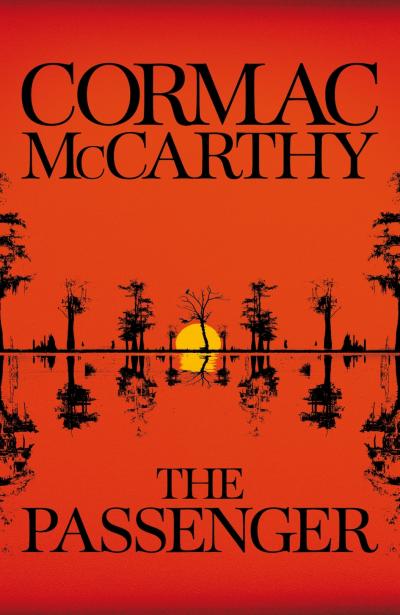
Cormac McCarthy’s first books in over a decade are coming out this year, a month apart from one another. The Passenger tells the story of deep-sea diver Bobby Western, desperately in love with his perfect, beautiful, wildly intelligent dead sister, Alicia. Then, Stella Maris is her story, named after the asylum to which she commits herself.
The Passenger is classic McCarthy fare: totally abstruse, excellently descriptive, and frustratingly digressive. It has elements of many of his previous novels, the strongest being the narrative of the perpetually wandering anti-hero. Western is a very obvious symbol of something dying at the frontiers of America, no longer at home in a country of which he is emblematic, drawn inexorably to the margins of the sea. The big bingo card of the great male American writers can be pulled out and stamped here – alcoholism, the death of the American dream, the nuclear bomb, impenetrable physics, conspiracy theorists, JFK’s assassination, etc, etc. The only thing missing is the tedious fascination with baseball.
As ever, McCarthy’s protagonist is pretty unlikeable, made worse here by an incestuous obsession with a minor. The opening of the book sees him diving into a suspicious plane wreck, from which one of the passengers has been removed, seemingly from the inside of the plane. Western’s friends die around him, his cat disappears, and all of his possessions are seized by the IRS with no explanation. This mystery, at least in The Passenger, has frustratingly scant resolution.
 Western’s story is intercut with Alicia’s apparent hallucinations of a troupe of performers, who make very little sense. Her story bleeds into Western’s: a trunk that their family has lost turns up with Alicia, looking like it’s been salvaged from a wreck. These episodes, from the chronology of Western’s story, seem to have occurred in the past, but at one point, the main “hallucination”, the (Thalidomide) Kid, appears to Western on a beach. There is a sense that this could be happening in the past, but that Alicia could equally be living in the deeps beneath Western, expressing some part of his, or their, subconscious.
The book, despite its focus on Western, is really all about Alicia, her death from suicide on Christmas Day (described on the first page) and Western’s inability to free himself of her. Western treks across the country, meeting a confusing roster of friends who all blend into the same bitter, drunk man and who all keep dying around him. He is searching for something that he can never find, pursued by forces that he (and the reader) will never understand.
The Passenger is engaging, an elegy for a lost, complicated love, but also (inevitably) an elegy for some great American truth. It is easy to slip into cynicism with McCarthy, as with others of his ilk, but there is a beauty in The Passenger which stops it being just another book about a tortured male soul on the borders of American society. For the uninitiated McCarthy reader, I personally think this novel is too hard-going and obscure to be the place to start. But for those die-hard McCarthy fans who admire the almost biblical, contradictory ramblings of his protagonists, this is a good late-career novel from a writer increasingly conscious of the end.
- The Passenger by Cormac McCarthy (Picador, £20)
- Read more book reviews on theartsdesk