

Claire Denis’ 1988 debut is a sensual madeleine to her Cameroonian childhood, with its taste of termites on butter, sound of birdsong and insect chitter, and the camera’s slow turn and rise into vast vistas. It’s also a colonial reckoning, setting out themes of violent incomprehension and fractured souls. Like the gaze of France (Cécile Ducasse), her child surrogate in this 1957 tale, Denis’ initial African vision is enigmatic and unblinking.
 Chocolat is framed by the adult France (Mireille Périer, pictured below), returning to Eighties Cameroon to seek her old colonial home. Modern buildings flit by and become remembered huts, a temporal transition carried by the great South African jazz pianist Abdullah Ibrahim’s warmly propulsive score, in a giddy rush of nostalgia. Robert Alazraki’s cinematography, now 4K-restored, catches the heat and light which makes exiles ache. And yet Denis probes the contradictions and fearful hatreds which make colonists' African love impossible to consummate. As she recalls in a new interview, even as a child she recognised the “abnormality” of her situation, “that it… [was] the end of something… but a great opportunity.”
France’s parents rule a ridiculous French outpost, with its garden and ritually raised Tricolour. District governor Marc (François Cluzet) has a dreamy tenderness for Cameroon, even as his arbitrary racial authority isolates him. His wife Aimée (Guilia Boschi) is more miserably capricious, berating their Anglo-schooled cook (“No more Yorkshire pudding!”), and simmering with attraction for their servant Protée (Isaach de Bankolé).
Chocolat’s first close-up is of black male skin, watched by the adult France, whose own white limbs are bare in the heat. Race still separates them. In the Fifties, Protée’s kind touch is reserved for secret, instructional intimacies with young France: smearing her arm with animal blood, proffering termites, playfully licking her hand. He and Aimée are heavy with racial animus, their bodies owned by Empire. Its fag-end’s brute decadence is emphasised by unwelcome French visitors: a thuggish coffee planter, ancestor of Isabelle Huppert’s plantation boss in Denis’s searingly apocalyptic, postcolonial White Material (2009), and a handsome beau whose “going native” only deepens his racist spite.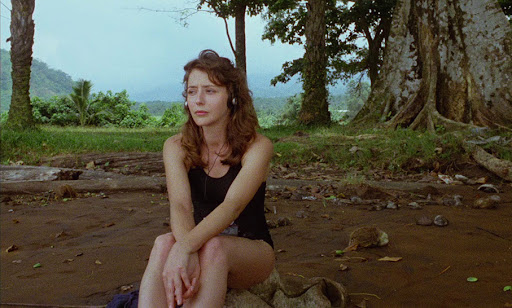 Chocolat never suggests White Material’s fatal powder-keg, or the violent, homoerotic heat and sweat of Beau Travail’s Djibouti. Its Africa stays an adventurous idyll for solitary, watchful France, as it was for Denis. Protée’s fate is surely less happy, but de Bankolé ensures wounded stoicism, wit and strength pulse beneath his servility. Vivid sensations and societal crimes are both expressed with Denis' characteristic, scalpel precision.
Chocolat’s seed was sown as Denis location-scouted Wim Wenders’ Paris, Texas (1984), whose arid American setting seemed “the landscape of cinema”, she says today, and brought Africa to mind. Her long, high-level apprenticeship, from Bresson extra to Wenders’ assistant director, saw her working on Jim Jarmusch’s Down By Law (1986) as she prepared her debut, as this release’s new interview and a generous, detailed 2019 onstage talk both explore. “Wim is a man who would never surrender,” she says of his influence on her own fierce trajectory. “If we don’t do the film, it’s better to die.” Denis is a great presence on camera, toughly feminine, warm and flinty.
Excellent essays on Chocolat’s postcolonial threads, Denis’ career and Ibrahim’s score, commentary by critic Kate Rennebohm and Mary Martin’s 2018 animated short Childhood Memories, recalling her own Nigerian heritage, round out this release.












Add comment