You’ll have seen the picture countless times. Gracing posters, postcards, tote bags, book and album covers, wrapping paper, phone cases and more, the iconic image of "The Great Wave off Kanagawa" is thought to be the most reproduced visual artwork of all time. Created by Katsushika Hokusai in Edo period Japan, "The Great Wave" was one of the earliest woodblock prints; a medium which was rapidly developed in this period of Japanese history which allowed for mass production of images. One of the earliest examples of this print is housed in the British Museum, and it was here that the initial inspiration for this brand-new opera was sparked. During a 2017 exhibition on the life and work of Hokusai, composer Dai Fujikura’s wife suggested that the life of this extraordinary artist may make for an intriguing biographical opera.
Almost a decade later, the curtain went up first in Glasgow then in Edinburgh for the world premiere of this brand-new work, the third collaboration between Fujikura and librettist Harry Ross. A coproduction between Scottish Opera and Japanese-led cultural agency KAJIMOTO, The Great Wave tracks the life and relationships of Katsushika Hokusai, as well as the evolution of art’s longevity and the impact of cross-cultural collaboration – something evidenced in the artistic work, but also in the occurrence of such a production in itself.
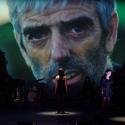
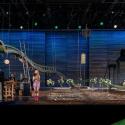
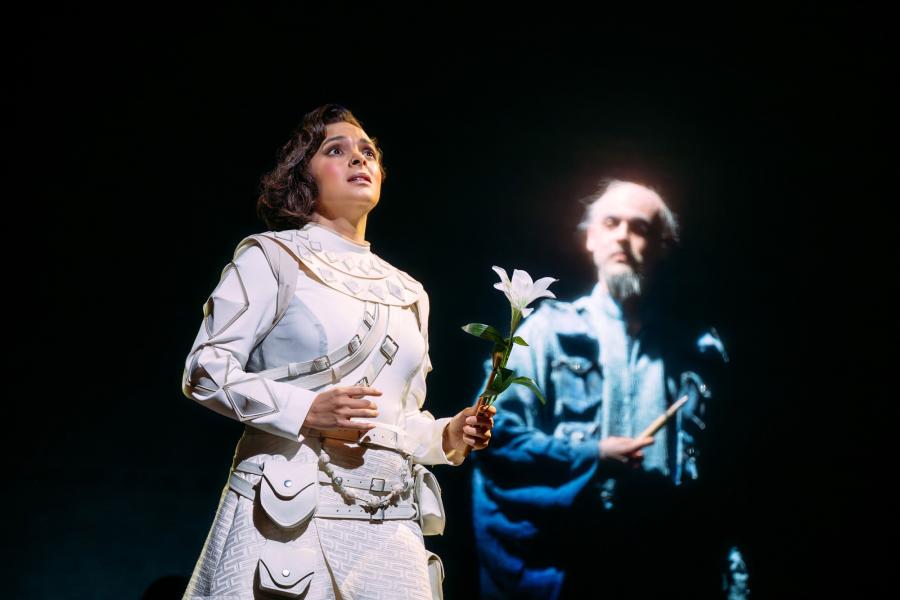
The piece opens with an eerie silence. Hokusai has finally passed on and achieved enlightenment after creating all the art he was destined to. The orchestra – who were on tremendous form under the baton of Music Director Stuart Sratford – gradually enter with shimmering strings and a poignant solo melody played by Shozan Hasegawa on the shakuhachi, a traditional Japanese flute. We see the spirit of Hokusai depart his coffin, elegantly played here by actor Dan Armstrong as he watches over his adult daughter Oi, tenderly portrayed by Columbian soprano Julieth Lozano Rolong, singing with a controlled lightsomeness, especially in the higher registers, as she mourns the loss of her "North Star". (Pictured below, Hok-Julieth Lozano Rolong and Dan Armstrong)
As the piece moves on, the audience is transported back in time to see how Hokusai’s life, work and legacy developed over time. Baritone Daisuke Ohyama is commanding as Hokusai, a painter who can be shrewd yet scatty, funny yet fastidious but always determined in his quest to create the finest art he possibly can. Throughout his life, the artist Hokusai continually changed his name – something which was common practice at the time, and sometimes if he felt a sponsor wasn’t paying him enough he’d sign his name "Hekusai" – a somewhat rude play on words which relates to the act of passing wind. Translated into English libretto, this joke doesn’t land and instead feels laboured and childish, though at least Fujikura’s impish score is rather charming.
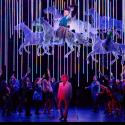
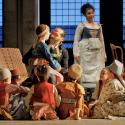
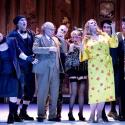
A crucial plot point is when a trade deal with the Dutch is discussed, and the anxieties of illegal trading with foreigners are aptly demonstrated from the assembled cast and chorus. The Dutch trader Dr Philipp Franz von Siebold – beautifully sung from a side box by countertenor Colin Shay – procures a pigment of Prussian Blue, and at once scenographer Junpei Kiz and props designer Eri Fukasawa’s sparse set, as well as Kaya Takahashi Deschene’s all-white costumes are transformed with a burst of colour from this rich blue hue. It evokes the blue and white of Delft tiles, along with the colour-scape of the Great Wave image, pertinently demonstrating how sharing between countries and cultures can make the world a far more vibrant place.
There is something about the piece as a whole that doesn’t quite gel. Musically, the score and the performance of it were excellent, but the opera is not abstract enough to be conceptual, yet not as narrative-driven as it should be to present a gripping story. Perhaps the colours present on this particular block need a bit more mixing for this to become a work of art that will see its own reproduction and endurance.