If you were new to contemporary opera, you might think it was forbidden for modern works to be funny. Tragedy is still the default setting for major commissions. You only get serious money if you have serious thoughts and serious music, it seems. At the Royal Opera, the policy is to stage unfunny, ancient buffas on the main stage and sharp, modern ones in the Linbury Studio Theatre. Gerald Barry’s The Importance of Being Earnest is the latest.
The concert premiere last year was as close to an overnight smash hit as it is possible to get in opera. The three-act adaptation was snapped up by several opera companies. Keen to keep its finger on the pulse, the Royal Opera rushed in before everyone else with last night's UK premiere staging.
But was it done in too much of a rush? The great thing about this opera is the tension between the polished perfection of Wilde's original words and the incontinent insanities of Barry's score. At the end of Act II - in a scene that has already entered operatic folklore - Barry’s music starts to behave quite literally like a bull in a china shop, careering through the verbal topiary with pistols, loudspeakers, giant mallets and smashing plates.
Scales, more gin-and-tonic than diatonic, hurtled around the ensemble and through the cast
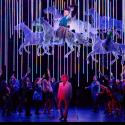
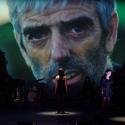
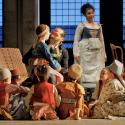
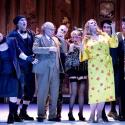
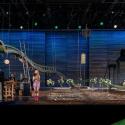
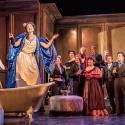
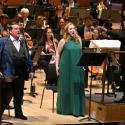
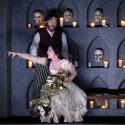
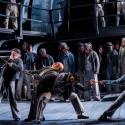
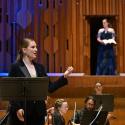
It is a madcap tomfoolery that works only if Wilde's words are played dead straight. Edwardian straight. By default, this is what we got from the nicely stiff concert performance at the Barbican. At the Linbury Studio Theatre, director Ramin Gray plunged us into a mildly surreal version of the present day, characters emerging and returning from the audience in everyman clothes, acting out on a pretty bald stage (save the orchestra). Without a frigid, period foil, the dislocations offered by Barry were dissipated amid Gray’s own absurdist offerings.
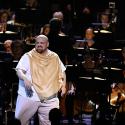
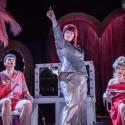
All of which might have been fine if Gray had delivered anything fresh or sharp. Instead we got stale and blurry. The fact is that you present a routine of silly walks or éclair-face-stuffing at you peril. We’ve seen these sketches done before – and better. The cast wasn't bad. There was some fun deranged mugging from Hilary Summers’ scene-stealing Miss Prism. And Alan Ewing was as brilliant as ever as the Kraut-loving, closet Fascist (in Barry's imagination) Lady Bracknell. There was something a bit Keeping Up Appearances about the rest of the acting, though, from Paul Curievici (John Worthing), Benedict Nelson (Algernon), Geoffrey Dolton (Reverend Chasuble) and Stephanie Marshall (Gwendolen). Marshall redeemed herself in a wonderful Princess Di turn behind the loudspeaker. Ida Falk Winland (Cecily) was piercingly good throughout.
None of the strange games from Gray or from lighting designer Franz Peter David (who provided pretty but hyperactive dislocations of his own) could match what was going on in the music. Here, the Britten Sinfonia, conducted with spirit by Tim Murray and rewarded with a staged presence, were presenting a skit of their own. Scales, more gin-and-tonic than diatonic, hurtled and hocketed around the ensemble and through the voices of the cast, with little or no regard for comfort or range. Chunks of Beethoven's Ninth appeared as if they'd been shoved through a mincer. Along the way we visited demented arrangements of Auld Lang Syne, a French revolutionay song and Schiller’s Ode to Joy.
Wildeans will be upset. Most of the carefully crafted exchanges are mangled, musical comedy substituting the verbal wit. But if comedy is about pushing wrongness beyond the point at which it is forgivable or acceptable, Barry’s opera must be considered a masterpiece. By wanting to be first rather than the best, however, the Royal Opera appear to have cut corners. Barry deserves better.