Among the many pleasures of Donizetti's Mary Stuart is the fun of watching a chunk of primary-school history filtered through a florid bel canto imagination. There are moments when you want to cry out, “That’s not what happened!” But it’s so fast-moving, so well-paced, that you soon stop complaining and just surrender.
In Antony McDonald’s account for Opera North, the grand guignol sensationalism of the drama are signalled by the opening backdrop, based on the Ditchley portrait of Elizabeth standing on a map of Britain, here with the rivers picked out in dripping blood.
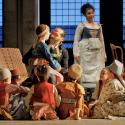
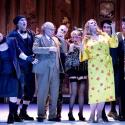
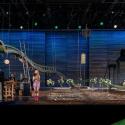
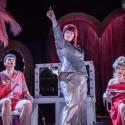
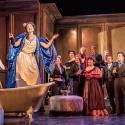
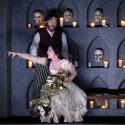
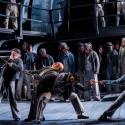
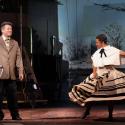
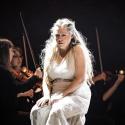
McDonald’s direction and designs are sparely effective. Two wooden walls, variously angled to create different spaces, serve to draw focus towards not only an expertly marshalled chorus but also the physical contrast between Elizabeth and Mary – one stiff and buttoned up, the other all graceful flowing movement. These disparities are cleverly underlined by a mixture of period and modern costume – the monarch’s rigid inflexibility in particular reinforced by the formality of her dress. A straight lift from Schiller, their electrifying but entirely fictitious meeting in Act Two finds Elizabeth tightly swathed in a red hunting jacket and brandishing a whip, in contrast to her French cousin’s looser, more flowing garment.
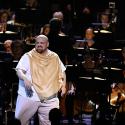
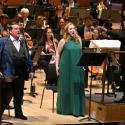
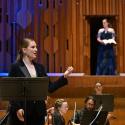
Let’s not forget the phenomenal performances. Antonia Cifrone’s tall, charismatic Elizabeth, all ice and steel, exudes power in her every vocal ornament. Sarah Connolly is astonishing as Mary. Entirely at ease with Donizetti’s more outré bel canto demands, it therefore came as a genuine surprise when it was announced during the interval that she was suffering from a throat infection. The male roles in this historical female face-off can’t help but seem slightly superfluous, but it was a pleasure to watch Turkish tenor Bűlent Bezdűz smouldering as Leicester after his turn as Rodolfo in the company’s recent La bohème. The production has a real sense of ensemble, of singers carefully listening to one other, typified in the glorious extended sextet near the end of the second act. Choral and orchestral contributions are likewise excellent, with Guido Johannes Rumstadt taking care to ensure that the vocal lines aren’t swamped by beefy orchestral writing.
- Mary Stuart at the Grand Theatre, Leeds, then on tour to Salford, Newcastle and Nottingham