Handel’s Brockes-Passion is a curious piece - sacred but not liturgical, and with a strong influence from opera, though it is a concert work. Solo voices predominate, and the singers assembled at Wigmore Hall were mostly fine. Jonathan Cohen and his Baroque ensemble, Arcangelo, provided imaginative and sensitive accompaniment, the playing relaxed and accommodating. This isn’t music of the scale or emotional depth of the Bach passions, so the light touch from the performers seemed appropriate. And if Handel’s score sometimes underwhelmed, the quality of the singing usually compensated.
Several composers tackled the passion libretto by Berthold Heinrich Brockes around the turn of the 18th century, and, apart from Handel himself, they were all associated with Hamburg–Fasch and Telemann the other two big names. The libretto draws freely from the gospels, but was not intended for liturgical use, allowing composers some stylistic license, especially in the direction of opera. Handel had worked in Hamburg, but at the time of his Brockes Passion, around 1715, he was already in London, and the reason for his composing the setting remains a mystery, although a commission from Hamburg seems likely. The result is a work that sits squarely between the Italianate liturgical music of his younger years and the opera of his maturity. The vocal style is usually staid, though there are occasional flourishes, while the accompaniment is often ornate, with busy bass lines and elaborate obbligatos.
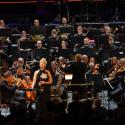
Arcangelo is a small orchestra, just one to part in the strings, here complemented with pairs of oboes and bassoons, a chamber organ and lute for continuo, and Cohen himself at the harpsichord. The imposing block chords that begin the Overture suggest that Handel had a larger ensemble in mind. The chorus of eight also seemed meagre, although there are very few choral numbers, just occasional chorales. In fact, it is more a chorus of soloists, as each singer is called on to cameo as a minor character in the story: Marcus Farnsworth’s Pilate and Matthew Long’s Peter were particularly impressive.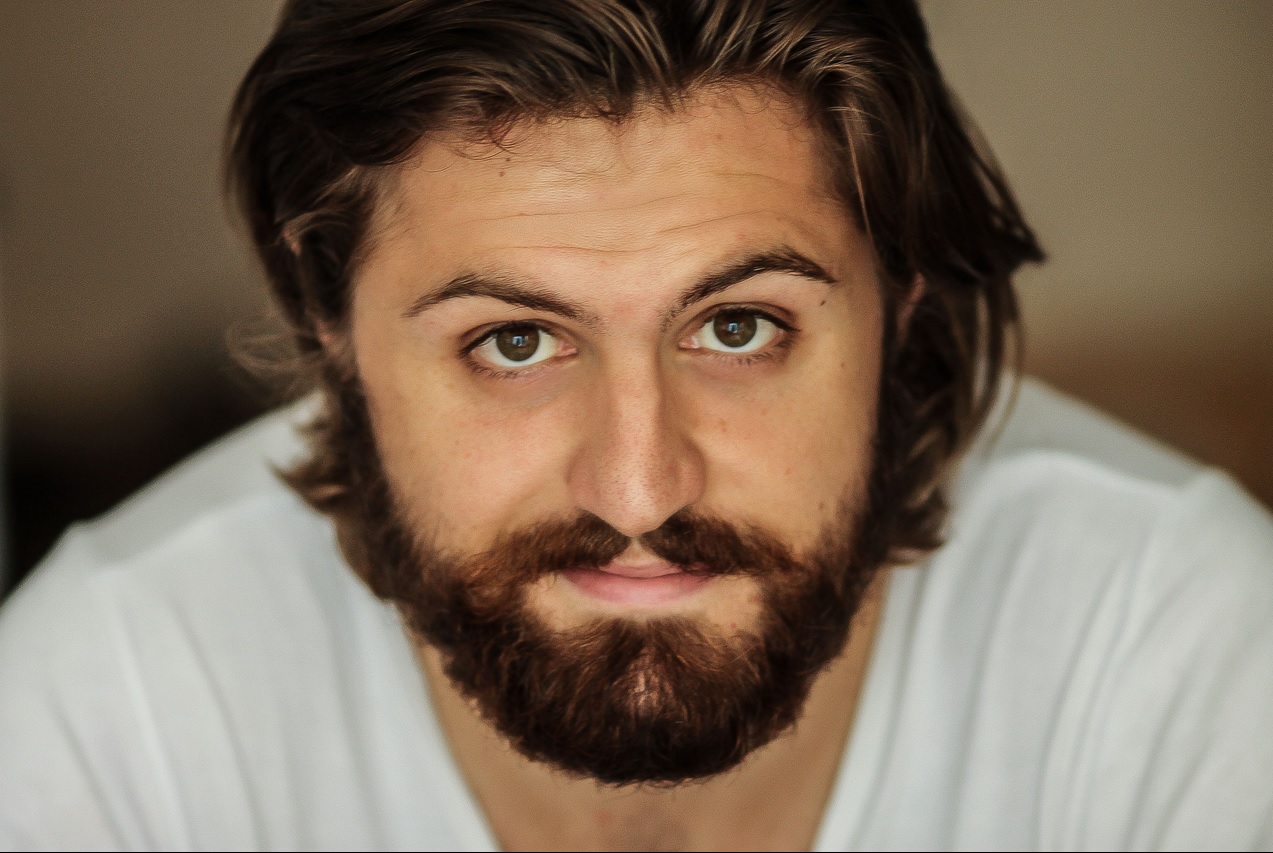 Among the soloists proper, the finest performance was from Konstantin Krimmel as Jesus (pictured above by Maren Urlich). His has a rich but modestly scaled baritone, ideal for Baroque repertoire, and with enough variety of expression to bring Handel’s underplayed characterisation to life. He even looks the part! Stuart Jackson, as the Evangelist, also has an ideal Baroque sound, expressive and impassioned, but always within the strict stylistic bounds of the era. Unfortunately, Brockes writes out Jesus after the meeting with Pilate—a great shame given Krimmel’s performance in the first half—and the crucifixion is mostly narrated by the Evangelist. Jackson paced his expression beautifully, remaining a neutral observer for the earlier scenes, and then gradually increasing the emotion towards the end. Sandrine Piau took the role of “Daughter of Zion”, an allegorical figure offering pious reflections on the action. She is a reliable Baroque singer, and she clearly had the measure of this role, although her voice often sounded brittle and strained.
That was a shame, because the defining virtue of Arcangelo is their relaxed sound and warm, involving textures. Cohen takes a strict approach to straight tone, and to instrumentation with his small ensemble, but nothing about the performance style ever feels severe. Tempos are not overly driven, and the singers are given the space to breathe and to shape their phrases. The imaginative lute accompaniment from Thomas Dunford gently warmed the continuo texture, and he worked particularly well with Piau. In some of the more anguished arias, Handel includes driving dotted-rhythm accompaniments, and here Cohen increases both the tempo and the weight of the accents, to impressive effect.
But this was mostly small-scale Handel, and given the already modest dramatic scope of the work, reducing the ensemble focussed attention on the soloists. Stuart Jackson shone, as did Konstantin Krimmel, but both deserved more interesting material to work with.
- This concert will be broadcast on BBC Radio 3 on Thursday 10 October
- More classical reviews on theartsdesk