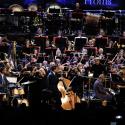
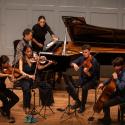
Perhaps I’m being too literal-minded, but demanding South American music from a concert programme advertised as “South American Baroque” doesn’t seem entirely unreasonable. When you add Colombian-born soprano Juanita Lascarro as soloist and Brazilian Rodolfo Richter as leader it seems actively desirable – a chance to encounter an underexposed seam of music in the hands of expert guides. Turns out that all musical roads lead back to Europe, to the ubiquitous Scarlattis, Handel and Hasse, and despite a few exotic excursions to the New World it was in the familiar Old that we spent the bulk of our evening.
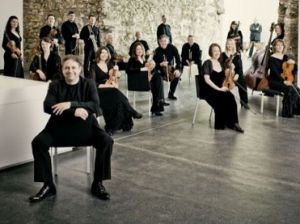
The fractured concept was mirrored in a rather spasmodic first half, its series of short works achieving little dialogue among themselves and lasting not much longer than each laborious bout of retuning and stage management that preceded them. Hasse’s Overture to Cleofide provided a solidly good-natured (if rather unexciting) opening, enlivened by the woody hoot of two period horns. The ensemble’s characteristic warmth of sound was much in evidence, with a pleasing weight to the bowing, especially in the stately sway of the Andante.
Representing the New World was an Adagio and Fugue by a composer rejoicing in the fulsome appellation of José Joaquim Emerico Lobo de Mesquita. Almost as memorable as his name, this was the surprise of the evening. An Adagio of almost chorale-like simplicity was the white cloth draped over a structure of extraordinary intricacy. With the chromatic theme of the Fugue already anticipated, we segued into its pugnacious debates without pause. Growing from these early squabbles into a charged climax of gloriously un-Baroque proportions (complete with ominous Russian-style pedal notes in the horns), Mesquita’s Fugue was at last exhausted, having twisted every suspension-fuelled emotion from the audience.
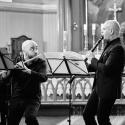
 Among the set of musical novelties concluding the first half (which included Michel Corrette’s treatment of Rameau’s “Les sauvages” – a melody originally written on the occasion of two North American Indians being displayed at the St Germain fair of 1725), it was the anonymous Peruvian Cachua that did the business. A sort of South American La folia, its variations pounded and stamped their way through a series of bass-driven (with the additional support of a Baroque guitar) episodes, each showcasing a different orchestral texture. Cameos from recorder and oboes were nicely balanced and a respite from the slap and punch of the refrain.
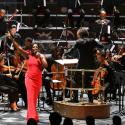
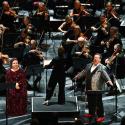
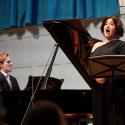
Juanita Lascarro is a soprano we don’t see nearly enough of in the UK. Unusually securely earthed, her rounded tone is flexible enough to tackle the more intimate moments of Handel alongside Juliette and Manon. Showing her Baroque credentials in the impeccably articulated coloratura of “Dell’offese a vendicarmi” from Domenico Zipoli’s cantata of the same name, she kept the mood contained. Refusing to give way to full dramatic force, she and Andrew Skidmore’s solo cello drew us into the interior drama of the aria, crafting a da capo of impressively understated embellishment.
Restraint was cast aside however for Handel’s dramatic cantata Il delirio amoroso. After an incongruously joyous Sinfonia, all extrovert cascades of semiquavers from the strings, we were plunged into the darker underworld dream-narrative of Chloris and her lover Thyrsis. The evocative opening aria “Un pensiero voli in ciel” (“Let a thought soar into the sky”) balanced long lines from soprano against lyrical interjections from solo violin (an exquisite Rodolfo Richter), creating a mood of hope abandoned in the lamentation of “Perte lasciai la luce”. Projecting all the emotion she had held back from the Zipoli, Lascarro guided us through to the final emotive twist, making sense of the rather sudden “it was only a dream" conclusion of the jaunty Minuet.
Never less than deeply satisfying, the playing of the musicians of the Academy of Ancient Music can spoil an audience. Secure in the quality of what we are hearing, a midweek crowd of the pampered urban variety need an idea, a concept to command our focus and channel energies away from second-half fidgets. Though superbly executed, this programme lacked dramatic direction, and I suspect its meanderings lost many would-be travellers along the course of its journey.
- See what's on at the Wigmore Hall this season
- Find Juanita Lascarro on Amazon
- Find the Academy of Ancient Music on Amazon