The new Ninth Symphony, from the pen of Sir Peter Maxwell Davies, is something of a paradox. It was commissioned by the Royal Liverpool Philharmonic and the Helskinki Philharmonic Orchestra and is dedicated to the Queen on the occasion of her Diamond Jubilee. And yet it is a round condemnation of the nation’s interventions – called "disastrous" by the composer in his programme notes – in Iraq and Afghanistan.
Quite how that sits in a work dedicated to Her Majesty who is, after all, Head of the Armed Services created some confusion in the minds of those attending its premiere. The composer has evidently changed his mind somewhat over this composition. He originally suggested that the work would reflect the Queen’s reign, “good and bad, happy and sad”. It seems entirely possible the symphony dwells on some of the least savoury happenings of her reign.
 But what of the work itself? It follows a distinct pattern: a triumphant opening and first half, followed by a somewhat introverted and slow second part. Within the work, a brass sextet interpolates a number of fanfares – completely appropriate for the nature and dedication of the work. In this performance, the players were set slightly apart from the orchestra, though one can imagine that, in a larger environment, these interpolations could become intensely dramatic.
Compared with some of Maxwell Davies' other symphonies the Ninth is quite concentrated - lasting around 25 minutes - but, similar to other works, it draws on a range of influences. There are military marches, touches of modality linked to medieval plainsong, even a reworking of the trio from Haydn’s String Quartet Op 54 No 2.
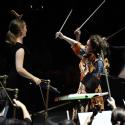
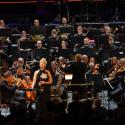
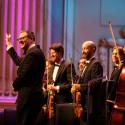
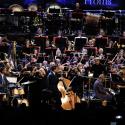
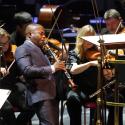
It’s scored for a large orchestra and the Royal Liverpool Philharmonic Orchestra, under Vasily Petrenko, gave a stylish, accomplished performance. The percussion was particularly hard-worked, with some skilful playing from the timpanist who was expected to navigate his way through a complex line. The same was true for those playing both the glockenspiel and the marimba.
The other work in the programme was another Ninth Symphony – that of Beethoven
The upper woodwind also needed to be seriously on the ball in this work, something they achieved expertly, though it did transpire, chatting to some orchestra members after the performance, that a considerable amount of rehearsal time had been devoted to the work. The symphony, which has a lot to say and pus its message over in a concentrated, powerful way, certainly deserves another outing and one is scheduled for August, when the RLPO makes its appearance, again under Petrenko, at this year’s BBC Proms.
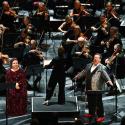
The other work in the programme was another Ninth Symphony – that of Beethoven. The orchestra was joined by the Royal Liverpool Philharmonic Choir who gave a highly controlled performance of Britten’s arrangement of the National Anthem at the start of the concert. Petrenko led the RLPO in a very deliberate, paced interpretation of the first movement while the scherzo bubbled away. Least convincing in this performance was the Adagio, which lacked emotion and felt somewhat stilted.
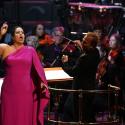
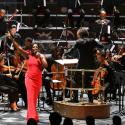
The same could be said of the lower strings at the start of the finale but that was soon dispelled when the vocalists began their contribution. Gidon Saks was a powerful bass, though even he was often overpowered by the sheer verve of the orchestra. Tenor Paul Charles Clarke felt similarly overwhelmed while the two women, mezzo-soprano Sarah Richmond and soprano Katarzyna Donaoldska gave perfectly fine performances though they felt just a little lightweight.