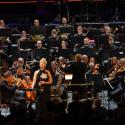
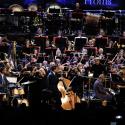
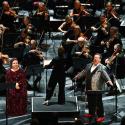
It wasn’t really the orchestra’s night. Nor the soloists'. Nor, even, the conductor's. The Royal Liverpool Philharmonic Choir totally stole the show, well surpassing the incredibly high standards which they already regularly attain and performing not as a large symphonic chorus but as a something akin to one of the highly specialist choirs with which this country is blessed.
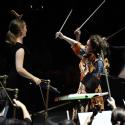
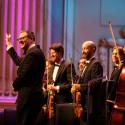
That is not to say that all the others on the platform at Philharmonic Hall were at all under par – indeed, they were far from it, setting not one foot wrong in a performance which evidently stirred the audience. Sir Andrew Davis, conductor emeritus of the Royal Liverpool Philharmonic Orchestra, was back in the city where he first met the RLPO 50 years ago at a conducting seminar. While his career has taken him all over the world to hugely prestigious venues, he is always welcomed back to Liverpool where – almost – it all started for him. And it is easy to see why that welcome is extended. There was a palpable rapport with the performers and he coaxed highly effective interpretations of the works on the programme – which he does whenever he’s back on the rostrum in Hope Street.
In some ways, seeing a large symphony orchestra and chorus set up to perform Duruflé’s gentle, soul-searching Requiem sowed a tiny seed of doubt, apprehension even. Many of us are used to listening to or performing in small-scale ensembles featuring choir and organ or, perhaps, the same line-up with a small orchestra. Yet, it worked. The stunning pianissimos at the outset of the Kyrie or the ‘Quam olim Abrahae’ closing the Offertory were virtually whispered, creating an atmosphere of spiritual stillness. In the same way, Davis coaxed power and majesty from the chorus when he wanted it: the Hosanna at the end of the Sanctus, for instance or the Dies Irae section in the Libera Me movement, something often understated in a good many performances. 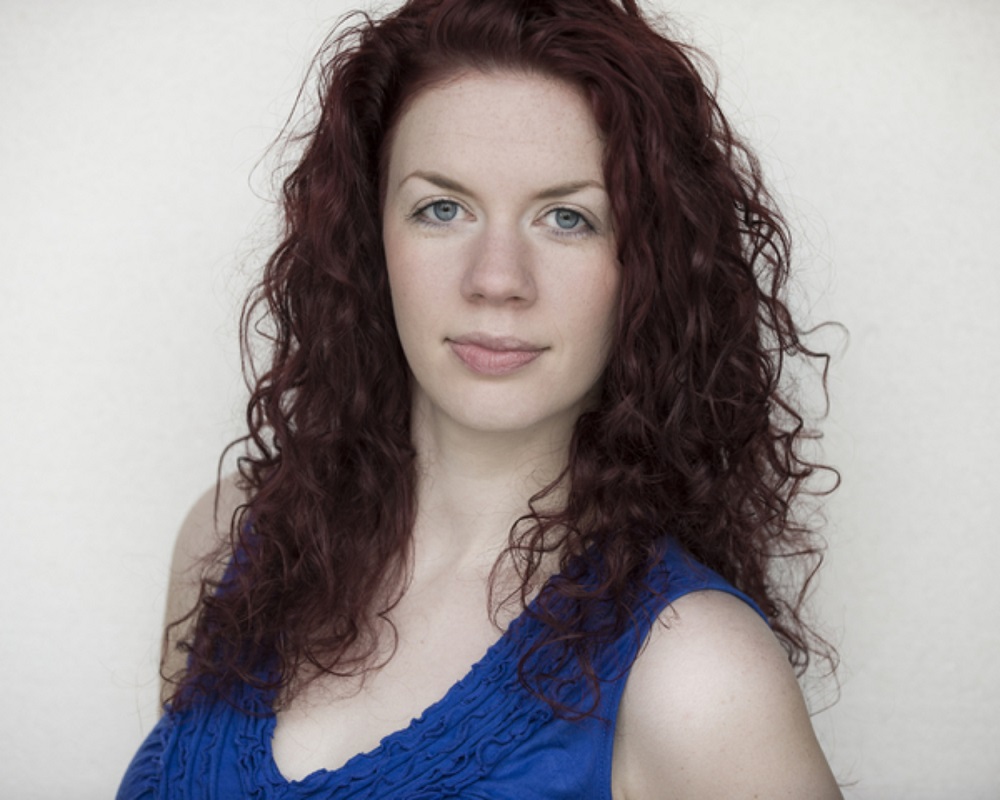 The chorus, though, has evidently been thoroughly drilled by chorus-master Ian Tracey. Their diction was near perfect and the tricky choral passage at the end of Lux Aeterna was absolutely together, as was the staccato passage at "de profundo lacu" in the Offertory. There were some slightly less satisfactory moments: a somewhat unsteady start to the Libera Me by the men of the chorus, as well as a rather sound at the beginning of the Kyrie – the ladies coping rather better. The rubatos in the Introit were rather glossed over, giving the piece an unnecessary feeling of urgency. The same was true of the rather breathless Sanctus.
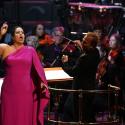
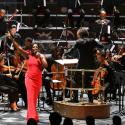
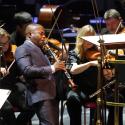
Baritone Roderick Williams was dramatic and in command at all times, his voice perfectly suited to this piece of penitential writing. The same was true of mezzo-soprano Catriona Morison, finding a beautiful depth in the Pie Jesu which stopped short of operatic overtones. Sir Andrew could be well pleased with this performance, especially of a Requiem by a French composer in such a momentous week of D-Day commemorations.
The concert began with a performance of Mozart’s Kyrie in D minor (K368a). Again, this was a measured, considered performance which was as dramatic as it was introspective. Mozart’s Symphony No. 39 was attacked with verve by an enlivened orchestra. The opening movement shimmered while the Andante shed any hint of ponderousness. A light, humorous minuet led to a finale which barely paused for breath. And it was easy to see that the conductor was enjoying himself as he turned to the audience in the closing few beats of the symphony and brought the piece to a close, facing the audience with a grin of total joy and triumph.