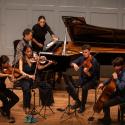
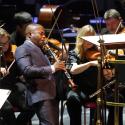
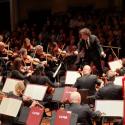
During early lockdown in 2020 Howard Goodall published an article pondering the role of the composer in a pandemic. His answer was that music has throughout history been successful at memorialising people and events, and that it could do so again. On the back of the article, the London Symphony Chorus invited Goodall to create such a piece for the care and health workers who had lost their lives to Covid. The first version of Never to Forget was released online in July 2020, the ‘virtual’ LSC singing the names of the then 122 workers who had died.
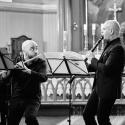
It is some senses hard to critique as a piece of music. Goodall foregrounds the names and largely keeps the music out of the way. The names are sung by the choir with simple melodic outlines, sometimes in antiphony, sometimes in chordal textures, sometimes by solo singers, with an accompaniment from a small chamber ensemble. The music is undemonstrative, in Goodall’s familiar warm, cathedrally style, with some effective solo writing for the cello. But it doesn’t draw attention to itself, content to be a vessel for the transmission of the names.
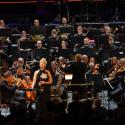
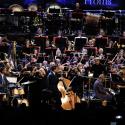
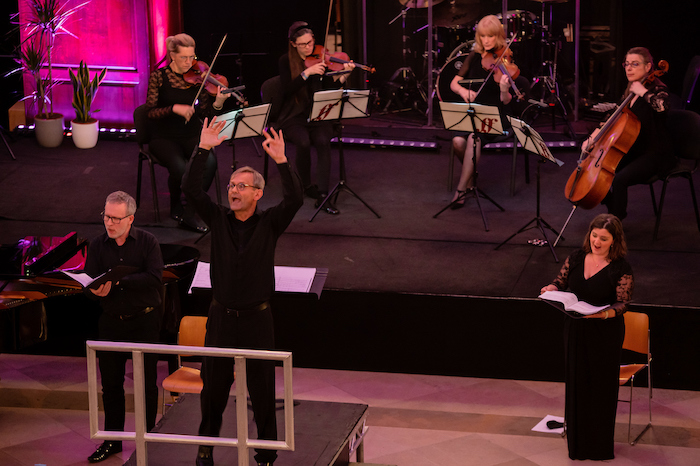 The 70 masked singers were arrayed around the gallery, with conductor Simon Halsey having to work in 360 degrees, with the names projected on a screen. Care had clearly been taken to pronounce the names correctly and it felt like a sincere and committed tribute to the dead. As Goodall said in a powerful introductory speech, “each of these names we cherish and honour – we sing these names with love and gratitude”. Although performed in a church, Never to Forget felt like an appropriately secular tribute to a group of people clearly hugely varied in cultural and national origin, and was in that sense a model of how such a thing can be done.
The other item in the programme was the premiere of Errollyn Wallen’s After Winter, in which choral songs are interspersed between numbers from Winter Journey, a new English translation of Schubert’s Winterreise. Commissioned by the Middlesbrough group Streetwise Opera, who create projects with homeless people, the 2020 premiere was cancelled and Spitalfields stepped in to prevent it disappearing completely. The conceit of the piece is that where Schubert’s lone traveller sings of loss and despair, the choir “open their arms to him in welcome and sing of hope, new beginnings and joy”.
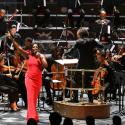
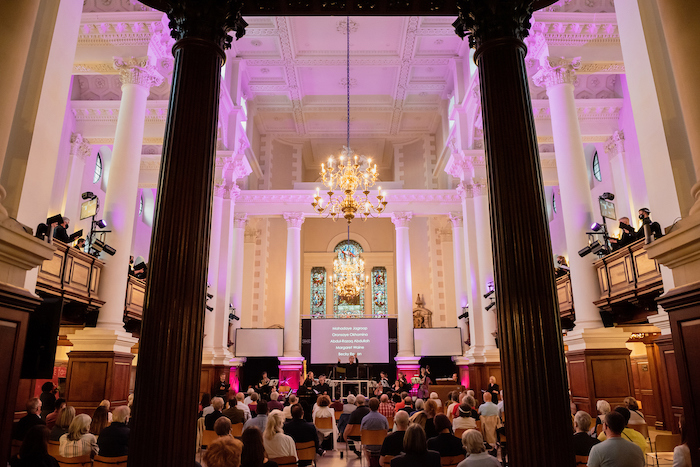 The Schubert was sung – magnificently – by Roderick Williams, accompanied by pianist Christopher Glynn. They gave us seven songs, Williams singing with impeccable diction and captivating characterisation and Glynn picking out the insistent rhythms of the accompaniments. These segued directly into the choral numbers, with texts by Wallen, based on her conversations with the Streetwise opera members.
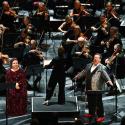
She brought together a range of stylistic references – there were hints of blues, gospel, klezmer and rock-musical, alongside nods to Schubert himself, but these were nicely integrated. The choir gave it their all despite their masks definitely hampering them in the big moments somewhat, but they were clearly enjoying performing again. As was Simon Halsey, visibly moved to be back conducting live after 16 months of forced inaction.
And even the horrible drilling sound from roadworks, the emergency sirens, the car horns, which intruded as much as they always do in performances in London churches, I also strangely welcomed for underlining the realness and spontaneity of the occasion. The full – if socially-distanced – audience clearly indicate a similar appetite.