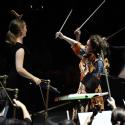
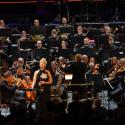
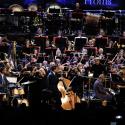
Space is big – that seems to be the message of Unsuk Chin’s new oratorio Le Chant des Enfants des Étoiles. The work sets texts, ranging from the Baroque to the present day, concerned with space and scale. The work’s cosmic aspirations are reflected in its performing forces, a huge orchestra with augmented percussion, chorus, children's choir, and, for good measure, a suitably Gothic organ part. The work was given a colourful and atmospheric performance by the Philharmonia under Esa-Pekka Salonen, with lighting effects – almost total darkness to begin, later a blue/green flood across the organ pipes – complementing the cosmic sounds.
Despite the huge number of instruments, this is primarily a choral work. Most of the choral writing is based on simple lines, but elaborated with continuous ornamentation to create complex, scintillate textures. The orchestral writing is mercurial and mainly focused on the percussion section, with the rest of the ensemble often seeming underused. But the percussion writing more than compensates, with continually imaginative effects, like paired antiphonal tubular bells, interchanging across the stage, or a thunder sheet blending into the decay from an organ pedal.
Chin is clearly comfortable working on such a large scale, and the 40-minute duration of the work was fully justified by the breadth of the conception. The 12 movements are grouped into two halves, the first of which gradually grows from a quiet opening to a central climax. The texts here include poems by the Portuguese poet Fernando Pessoa and the Scandavaians Edith Södergran and Eeva-Liisa Manner. The second half moves into English metaphysical territory with Henry Vaughan and William Blake, as well as the Spanish poet Juan Ramón Jiménez. Chin seems blissfully unconcerned with the meter of the language (mostly English, some Spanish), the texts informing the mood of the music, but sung to sometimes awkward rhythms, as dictated by the innovative choral textures.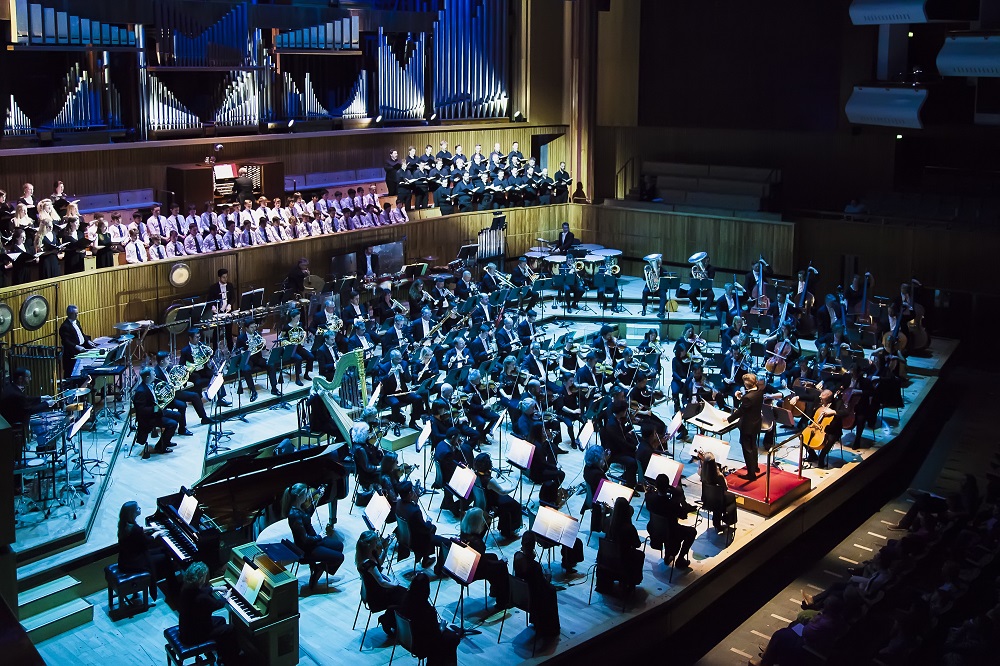 That must make it tough to sing, but the Philharmonia Voices and the Trinity Boys Choir did an excellent job. Chin makes no concessions to the boy choristers, regularly dividing the children's choir into separate contrapuntal lines, as well as giving them a highly exposed solo number (in Spanish, too). Esa-Pekka Salonen led a committed and vibrant performance from the Philharmonia – this was the European premiere, following a first performance in Seoul in 2016 – the orchestra yet again demonstrating its unsurpassed credentials in new music.
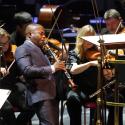
Salonen chose an eccentric first half to complement the new work. The concert opened with Biber’s Battalia. That’s the one with the dissonant movement where all the violins play in different keys. The violinists stood, in a Baroque formation around the continuo harpsichord, and played in a relatively unadorned period style, but the piece was present as little more than the curiosity it is. Beethoven’s Second Symphony followed, in a broad and opulent reading. Some of the first movement felt a little too comfortable, lacking in rhythmic urgency, but when this mood continued into the Larghetto second, it proved ideal. The finale was impressive too, still with broad textures, but now at a brisk pace and with ideal rhythmic focus.
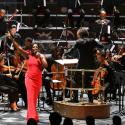
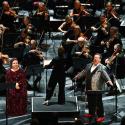
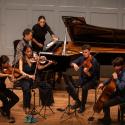
As interesting as the concert itself was the recital before, part of the Philharmonia’s "Music of Today" series. The short performance showcased the young Slovenian composer Vito Žuraj. His sounds are avant-garde and experimental, but always with an anarchic or humorous angle – shades of Ligeti, but even more absurd. Of the three pieces, the highlight was the song cycle Ubuquity, based on Jarry’s Ubu Roi. Soprano Nika Gorič was called on to sing, speak, growl, bleat ... you name it, while the ensemble produced a similar range of sounds beneath her, the potential chaos skilfully corralled by conductor Joana Mallwitz. The performance showed an impressive commitment from both to this radical new music, and indeed from Salonen himself, who, the programme informed us, had personally contributed to the financing of the pre-concert event.