A packed Albert Hall told an instructive story: programme Holst’s The Planets at the Proms and you can dare to do anything in the first half. Besides, though it will be a red letter day when we don’t have to put “women” in front of “conductors”, the Marin Alsop Last Night effect may have kindled interest in Susanna Mälkki, top of a still too-small list from the two concerts I’ve heard her give with the BBC Symphony Orchestra.
Mälkki seems just as authoritative in mainstream romantic and 20th century scores as she is in thornier so-called contemporary music (she spent seven years with Ensemble Intercontemporain; in the 2016-17 season she takes up her post as Chief Conductor of the lucky Helsinki Philharmonic Orchestra). She has a fabulous rhythmic sense; I found myself rocking in my swivelling seat not just in Boulez’s five orchestral extensions of his piano Notations but also in a work of far less certain intent, Luca Francesconi’s Duende: The Dark Notes.
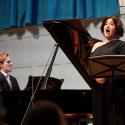
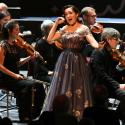
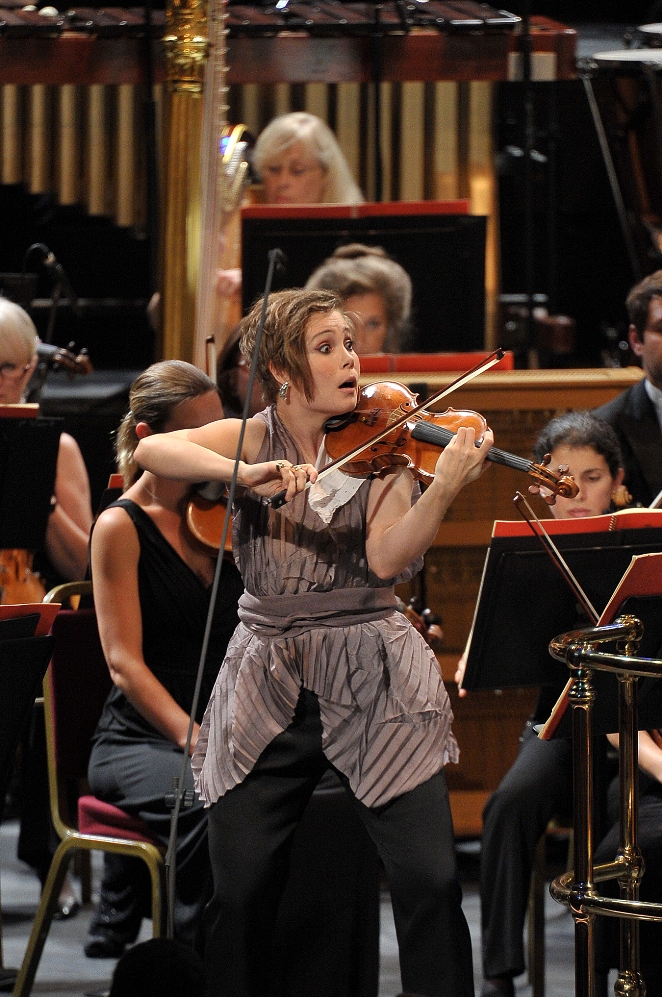 Duende, receiving its UK premiere, isn’t really a violin concerto; fearless Leila Josefowicz’s role (the violinist, pictured right) never dominates, and only twice, briefly, is she asked to do what a violinist usually does – to sing. Resistant to reading the note before I heard the performance, it was surprising to learn that there was any connection at all with “the demon of flamenco”. What we get is mostly stereotypical stratospheric twittering – Holst manages that much more effectively in the “Mercury” movement of The Planets – and a sense that the foreground is about to emerge, but it never does. The usual story of so many new scores: all process, hardly any “hooks” (though the xylophone contributes a scintillating few seconds).
As sound, Boulez’s world is so much more engaging. The sensuous layering, in the line of Ravel and Debussy, sounded absolutely fabulous given the haloing of the unpredictable hall; no detail passed unrevealed, though it never quite gave away secrets (there’s a mysterious passage in the last of the 1945 pieces to be orchestrally treated, No 7, in 1997, where BBCSO flutes almost broke into hypnotic melody).
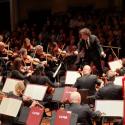
It was clear that Mälkki had her fingers on every pulse in Holst's universe
All that brought only sniggers from the atrocious group in Box Five right behind me. You’d have thought they’d have settled for what presumably they’d come to hear, The Planets, but it only got worse: several glasses too many clinked during movements, the chat level rising by the movement. Once I’d moved along out of earshot but into an unfortunate sightline, the worst offender – a city type trying to impress the girls – could still be seen out of the corner of one eye, exercising vigorous Nazi salutes to the militaristic rollicking of “Uranus”.
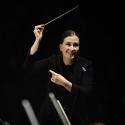
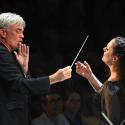
So much for total concentration. But even with such distractions, it was clear that Mälkki had her fingers on every pulse in Holst's universe. She was swiftly energetic in the juggernaut of war and the dances of Jupiter, with no slack as she moved into his big tune. She was atmospheric and patient in the profundities of Saturn – with a superb climax freighted by the magnificent BBC Symphony Orchestra brass ensemble – and the reaches of outer space in “Neptune”, where Elizabeth Burley’s celesta glinted magically and the oboe group pierced the heart as much as the youthful voices of the Elysian Singers wafting down from the Gallery. This is a Proms piece par excellence, with that spatial effect unique to the hall and selective blasts or pedals from the organ, but never has it sounded to me more like a total masterpiece than under Mälkki’s magnificent baton.