Matthew Bourne is not the first choreographer to tinker with the story of The Sleeping Beauty and he won't be the last, such is the lure of Tchaikovsky's score and the potency of the plot.
Good and evil, beauty and decrepitude, the suspended animation of adolescence – these are themes that will always invite a fresh spin. But Bourne’s version, now on its third season at Sadler’s Wells, signally fails to shed any new light on the archetypal tale of youth and hope triumphing over old grudges. The old ballet does this very well, some would say definitively. But by imposing an alien aesthetic on the story – his is a vampire Sleeping Beauty – Bourne muddies the moral certainties and throws narrative logic out of the window.
On paper, however, the chronology is neat. Opening the action in 1890, the date of the ballet’s premiere, and pushing on to Aurora's 21st birthday in 1911, when she pricks her finger and falls asleep for 100 years, embraces not one but two gothic crazes. Bram Stoker's Dracula was published in 1897. A hundred years later the Twilight Saga and Vampire Diary series took off. So far, so zeitgeisty. The trouble is that The Sleeping Beauty, like all the best fairytales, is about fundamentals – light overcoming darkness, good banishing evil. Turning every character bar the parents into a vampire makes nonsense of all that.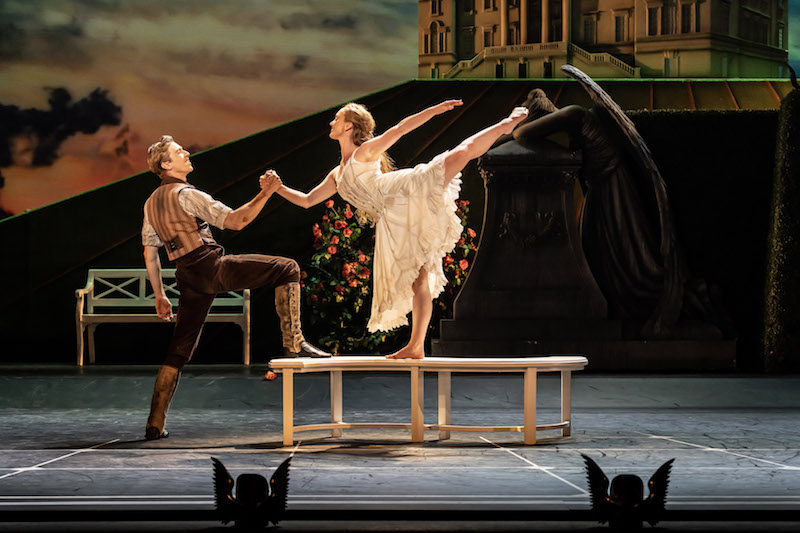 Visually, too, despite the economical yet opulent sets by Lez Brotherston, there is muddle. Even once you get the joke that every one of the fairies bestowing gifts on the baby Aurora is gothed up to look like Helena Bonham Carter on a girls’ night out, it remains unclear for far too long which of them is the equivalent of the Lilac Fairy whose pivotal purpose is to reverse the deadly curse of Carabosse. That character’s wickedness is far harder to signal now that everyone's wearing sooty eye makeup.
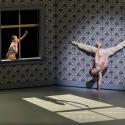
The choreography nods to Marius Petipa’s original steps with no clear rationale, sometimes paraphrasing, other times quoting chunks. The fairies’ solos are clearly meant as a homage to the great Imperial stepsmith, but only draw attention to the fact that the cast are not ballet dancers, nor very precise in their movements. The exception is Ashley Shaw’s Aurora, a peach of a princess who makes every step look gorgeous, along with those of her homespun beau, the palace gamekeeper (Andrew Monaghan, pictured above with Shaw). There is also some good material for Paris Fitzpatrick doubling as bad fairy Carabosse and her vampiric son Caradoc, a surprise alternative suitor who craves marriage to Aurora for reasons that will either make you howl or want to leave the theatre.
If brash and loud is you bag, you may not mind the recorded music, a rearranged version of Tchaikovsky’s score, brisky conducted by Brett Morris, but relayed at such volume that it often distorts. Also questionable, to my mind, is the addition of thunder and lightning effects to music that’s already bursting with such imagery, if only we could hear it. As is so often the case with Bourne's productions, the best bits are not the big set pieces but the snatches of interim business: squabbles between the palace servants, their attempts to soothe the cranky baby princess, the rod-puppet baby itself, who completely steals the scene. What’s gone AWOL is the heart of the story. The Royal Ballet’s revival of its retro Beauty early next year can't come soon enough for me.