

It takes a certain kind of artist to book American mezzo-extraordinaire Joyce DiDonato as a supporting act. It’s a risk. Even if you happen to be Juan Diego Flórez. But it’s one that actually paid off on the first night of Flórez’s three-concert residency at the Barbican.
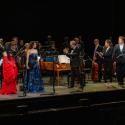
Joined not only by DiDonato but by soprano Julia Novikova and baritone Marco Caria (as well as the massed forces of the LSO), Flórez showed us a softer side than the bravado-recitalist we usually see during his London visits. Surrounded by his peers, duetting, quartetting and generally sharing the spotlight, Flórez rather paradoxically came into focus in a way I’ve rarely seen outside the opera house.
Flórez's performance of the Duke’s arias from Rigoletto made you long to see him in the role
Perhaps it’s the challenge of matching a singer like DiDonato, or greater familiarity with the operatic rather than song repertoire. Perhaps it’s just that performing with colleagues takes some of the rigidity out of the recital process. But whatever the cause, Flórez sang more freely and with greater commitment to character than he has previously demonstrated in London, offering his audience an evening of operatic lollipops that smuggled in a surprising amount of drama and no little musical interest along with its big tunes and top notes.
Very little of which interest came courtesy of conductor Guillermo García Calvo (a late replacement for Karel Mark Chichon) or the London Symphony Orchestra. For a symphony orchestra with a fighting claim to being London’s finest, the LSO certainly do a good impression of the worst. Smudged entries, ensemble issues, tempo madness and tuning disagreements were rife; presumably a programme of bel canto overtures and famous arias was the least of their priorities this week in allocating rehearsal time, but the result was cheap and needlessly scruffy. Music from Rigoletto and I vespri Siciliani was a late high-point, but by that time we’d been so baffled and battered by music from L’elisir d’amore and La Cenerentola that it struggled to make its impact.
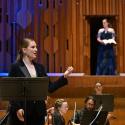
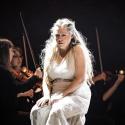
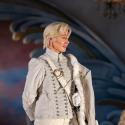
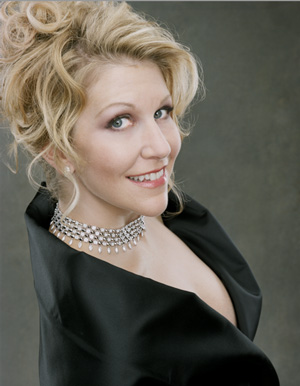 Flórez himself appeared as an unexpectedly ardent lover, crooning his way through a faultless “Una furtiva lagrima” with the help of a plangent solo bassoon, and offered us a wonderfully dramatic triptych of moods and contrasting tone colours in “Popoli dell’egitto” from Meyerbeer’s forgotten Il Crociato in Egitto. His performance of the Duke’s arias from Rigoletto made you long to see him in the role, but despite all this it was still the memory of DiDonato’s “Se Romeo” from Bellini’s I Capuletti e i Montecchi that lingered as we left the Barbican Hall (Donato pictured right).
While baritone Caria failed to make much of a mark (fighting an already-lost battle for dramatic supremacy with Flórez in the Belcore/Nemorino duet “Venti scudi”), Novikova did rather better. If her “Je veux vivre” was emotionally a little overripe, and her Gilda a little too knowing, there was no arguing with the evenness of her tone, nor her projection, which emerged well in the balance of the Rigoletto quartet – a triumphant and satisfyingly substantive finale after so much musical fluff.
Next week we’ll have the chance to see Flórez the solo-artist and Flórez the vocal coach, but whatever happens the residency has already offered us something new and valuable – a chance to see this stage animal in something more akin to his natural habitat, while keeping all the concert hall’s advantages of intimacy and proximity. A Flórez concert is always a party, and this was no exception, ending in two encores and cheers that belonged in a stadium rather than a recital hall. The superstar tenor certainly gave us all a good time, and on a chilly Sunday night in April there’s a lot to be said for anyone peddling the easy sunshine of Donizetti and the careless ardours of Gounod and Rossini.
Add comment