It might be the nature of Handel's operatic beasts, but performances tend to fall into two camps: brilliant in the fusion of drama and virtuosity, singing and playing, or boring to various degrees. If this handsome opening gambit in the 2019 London Handel Festival is a mixture of both, that may be due more to the fact that Berenice is one of the composer's more generic offerings, not in the league of Ariodante or Alcina which also premiered on the Covent Garden site two years earlier (in 1735). Young director Adele Thomas draws a winning and precise physicality from a fine cast, but like so many doesn't quite pull off the fine line needed between contemporary comedy and period gravitas.
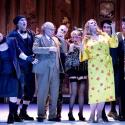
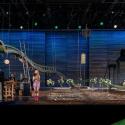
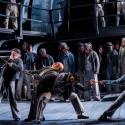
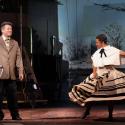
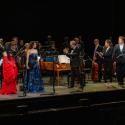
The start is immensely promising in the handsomely refurbished Linbury Theatre (oh, the smell of all that wood). From the orchestral censer straight up rise grateful plumes of incense to the very top of the theatre, a sound both incisive and gorgeous from the 19-strong London Handel Orchestra under Handel doyen Laurence Cummings. On stage, central to designer Hannah Clark's exuberant colour schemes, a big flower arrangement - always puts the audience in a good mood, as Barrie Kosky's Glyndebourne Saul proved - stands behind an amphitheatre of green sofa with lilac tassels and globe lamps supported by Burlingtonesque sphinxes at either end (we're nominally in Egypt). The plush takes quite a pummeling from 18th century figures ungracefully jumping over it and stomping along its length. It's a nice idea that the continuo group is part of their number (pictured below), and it even looks as if Thomas's production will feature a pratfaller of the kind of virtuosity we got in Cal McCrystal's riotous ENO Iolanthe.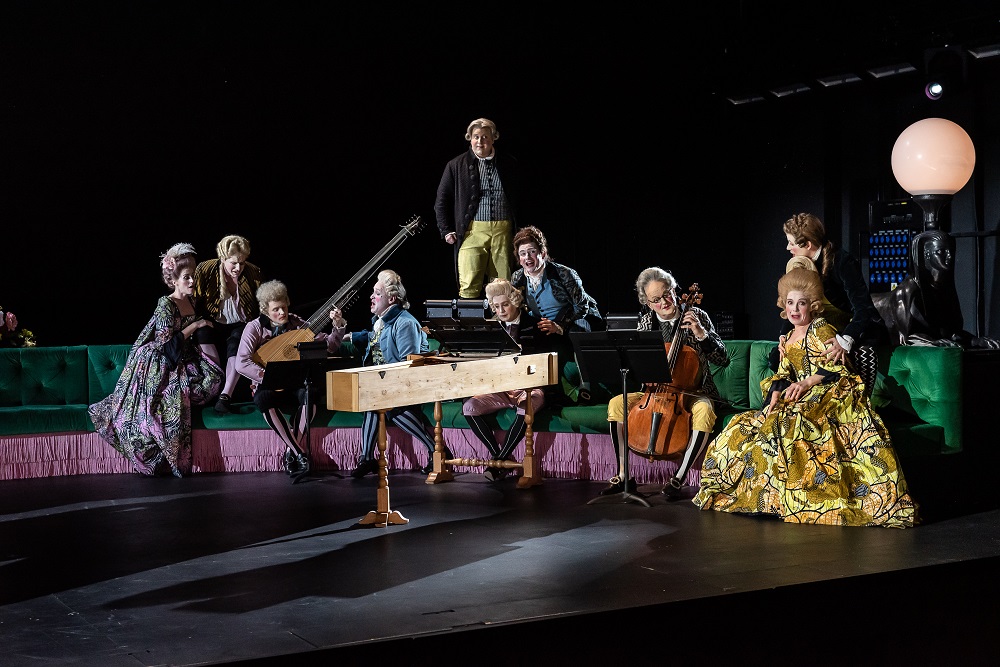 He turns out to be one of two countertenors, the comically gifted Patrick Terry as Arsace - a villain in the original, here just a joyous fool. The romantic imbroglio in the usual "Contests of Love and Politics" - librettist Antonio Salvi's original title for the Berenice libretto - is predictable: Egyptian Queen Cleopatra Berenice loves Prince Demetrio of Macedonia who loves her sister Selene and conspires with an unseen Mitridate of Pontus to put the latter on the throne. The essence is clear, but not all the text of Selma Dimitirevic's English translation. There are no supertitles in the Linbury, so you often strain to catch the gist of Berenice's arias from the otherwise dramatically vivid and feisty Claire Booth. Berenice, vindictive until the last minute, is hard to care for, even in the big Act Three aria with taxing oboe solo well taken by James Eastaway, but Booth does the venom most persuasively.
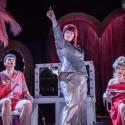
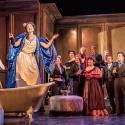
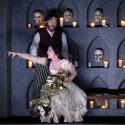
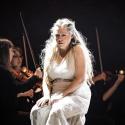
Lustrous vocal star of the evening is Jacquelyn Stucker as Prince Alessandro (pictured below with Terry's Arsace before an amusing semi-duet), whose hand Berenice needs to take to assure peace with Rome (he murders her 19 days later, as the production slyly tells us just before final applause). She's so convincing that, without having consulted the cast in advance, I was sure this was an especially brilliant countertenor playing a posturing adolescent. But the sheen was, sorry, too rich for a male falsettist, the mezzo plangency utterly distinctive (Stucker is officially a soprano, but on this evidence she would be superb in the higher trousers roles of Strauss's Octavian and Composer). 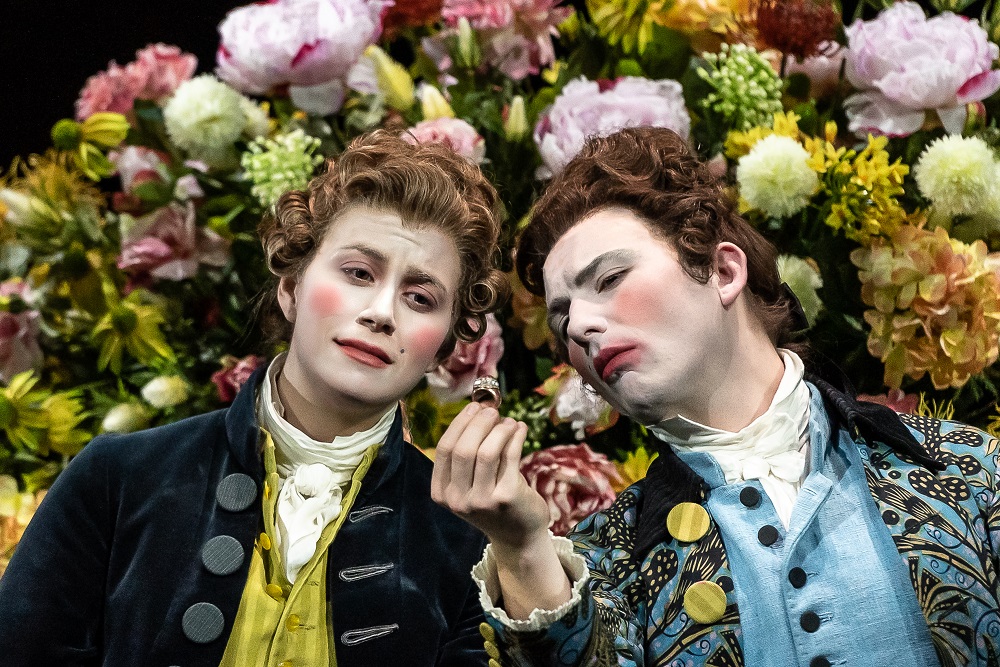 James Laing does full credit to his countertenor race, though, as t'other prince, and there's further vocal distinction from Rachel Lloyd as his love Selene. Both spit hellfire in their rage arias, supported to the hilt by vibrant ricochets from Cummings' strings. Alessandro Fisher and William Berger fulfil their emissary roles as best they can.
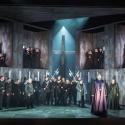
The Kosky Saul effect leads one to expect a gradual stripping-away of finery and mannerism; but this cast has to act out its increasingly violent shenanigans within the one framework. As a result we never fear or believe in the danger when Demetrio's treachery is revealed. At some point real drama needs to burst out of the jokiness, but that doesn't quite happen, and the composer doesn't help. Still, as culinary opera, it's all quite tasty enough, though mostly untouched by the genius of which Handel the master chef is capable.