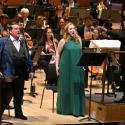
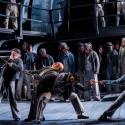
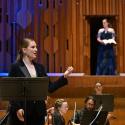
It all adds up to a cleverly interconnected triple bill and the perfect experience for five singers from the Royal Opera's Jette Parker Artists Programme. There are three losses, two of them deaths, only one mourned for, a baritone in all three operas and three other singers in two of them, plus dazzling, finely honed work from various small forces of the Britten Sinfonia under conductor Peggy Wu (also on the JPAP).
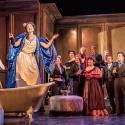
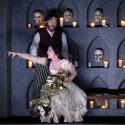
The weak link has nothing to do with any of the performances, nor Talia Stern's surefooted direction, so let's get that out of the way first. I'd be surprised if Elizabeth Bowen's short story about a dull husband deserted by his flighty wife isn't better than Kate Kennedy's libretto for Making Arrangements, which like Anne Ridler's for Maconchy has the occasional clunky line. The main question, though, is whether Charlotte Bray's spare, uningratiating style suits the subject. There's superb writing for harp and double-bass especially, but the transition to sudden, fuller-scored violence when Hewson Blair starts destroying his divorce-seeking wife's dresses (pictured below) feels manufactured.
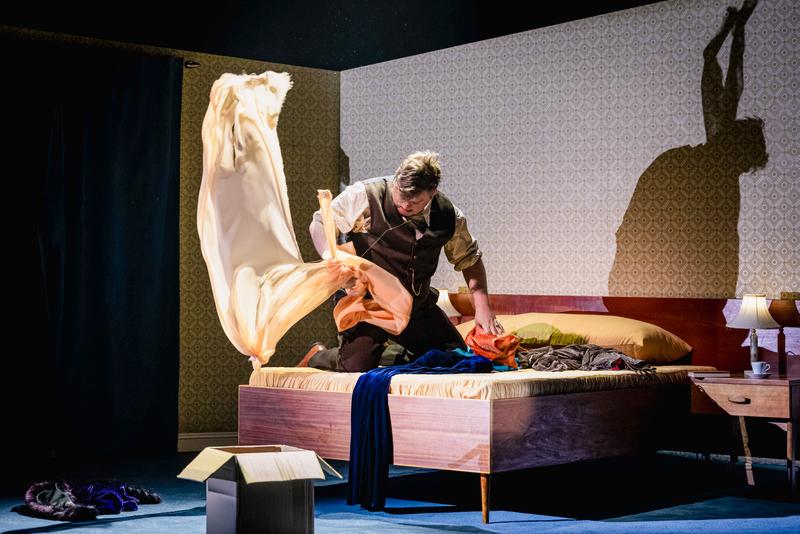
That outbreak of violence could be the point of this lean offering about uninteresting people, and it's not Sam Hird's fault if it seems silly rather than unsettling. The vocal writing is too often on one note, ungainly after Maconchy's sensitivity in The Departure. Hannah Edmunds as the superficial eloper and Jingwen Chai as the maid have to wait until Four Sisters to make their mark. Bray could have thrown more of a bone to lover Leslie (Georgi Guliashvili), but gives him nothing to go on. The dramatic point of interest is that wife and husband sing together though nominally apart, through the device of her letter. The nostalgia for a brighter term is dull and unearned.
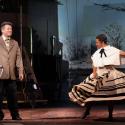
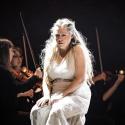
Much less so in The Departure, though the little dance scene between living husband Mark (Hird again) and dead wife Julia (Ellen Pearson) is the most conventional part of a kaleidoscopic score. We meet Julia at her bedroom dressing table: has she just attended her husband's funeral? It turns out that she's the one who was killed, in a car crash, and the offstage chorus of Latin chants is drawing her to leaving her presence in this life.
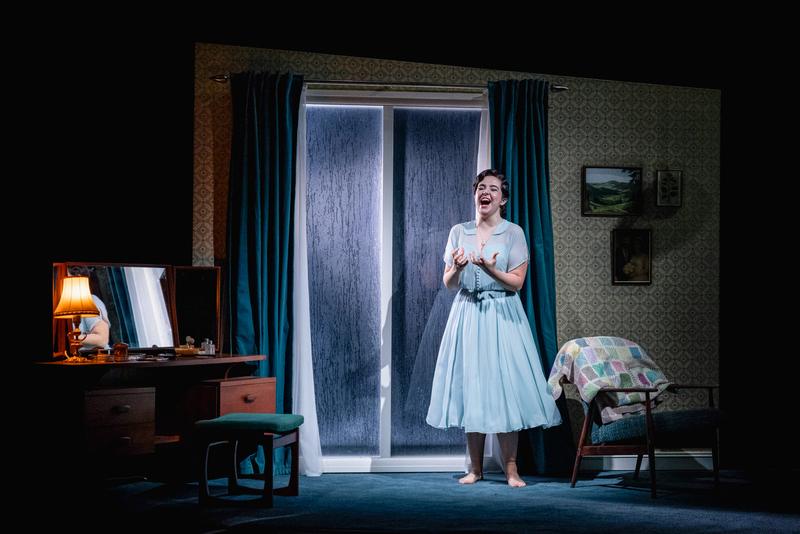
The pace and the proportions are near-perfect, mawkishness just avoided, and the final dematerialisation beautifully judged on all fronts. I'd have defined Pearson as a bright, lightish lyric soprano, not a mezzo, but she holds affectingly to truthfulness throughout.
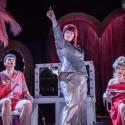
The tongs and the bones which Maconchy uses so well here go berserk in Langer's Four Sisters - the bitonality on marimbaphone is quite a thing - and percussionist Tim Gunnell has to handle so much more including flexatone, that wildly-wailing curiosity of two bits of metal attached to a handle, beloved of Shostakovich, and a whistle (watch out for tinnitus if you're near the front of Linbury stalls right) and steel pan. The orchestral introduction grabs you by the throat, and with Ana Inés Jabares-Pita now let loose on lurid designs, Stern matches it with the post-binge collapse of Irina, Masha and Olga.
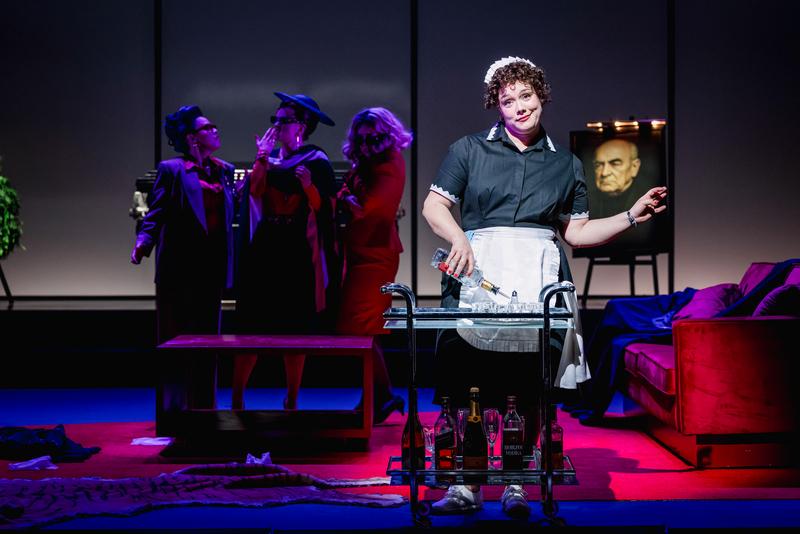
In John Lloyd Davies's pithy, exuberant libretto, they're daughters of a just-deceased Russian émigré who made it high on the American dream. To whom has he left his money? The title gives the game away immediately, and we see it coming in the lush solos of the maid. Here Hannah Edmunds comes into her own and shows potential not just for comedy but also for big lyric-dramatic roles (Wagner even). The three sisters sometimes function as a kind of Beverley/Puppini Sisters on acid, and each gets a pastiche aria of where in this wonderful country she'll settle once she's laid her hands on all that cash - cheesy, yes, but rewarding for the singers (Madeline Robinson now appearing alongside Cai and Pearson).
Hird gets the best of his three roles as lawyer Krumpelblatt, sustaining the New Joisey accent to perfection. In the pared-down version for chamber orchestra which Langer has made especially for this run, it's not just Gunnell who has to work overtime. The frenetic pace might do with an injection of pathos, though there's queasiness to match the obvious predecessor, Puccini's Gianni Schicchi, alongside which the Langer could appear in a future double bill (the women would have roles in both). It's worth the evening above all for this joyous, daft gem, but you'll glean some rewards in the Maconchy too.