With the eyes of musical fashion turned relentlessly on the calculating stage works of chilly alchemist George Benjamin, hopes ran high for a brighter spark in a new opera by his contemporary Mark-Anthony Turnage. Would Coraline, a music-drama for children of all ages based on the celebrated story by Neil Gaiman, burst into flames like Greek and the last two acts of The Silver Tassie or continue the elegiac strand in the best of Anna Nicole? Alas, no: despite the dedicated musicianship and the nifty staging of Aletta Collins, no-one is going to come out of this two-hour immersion fired up or much moved.
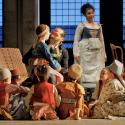
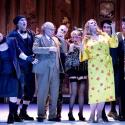
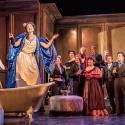
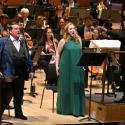
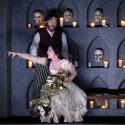
Still, the run is sold out. I suspect that's less to do with Turnage than with literary megastar Gaiman. His novella - inexplicably not on sale at the Barbican, or I'd have bought a copy - has the kind of imaginative scariness as its premise that hooks young readers. 11-year-old Coraline finds a way in to a parallel universe where "Other Mother" offers her everything she wants, but in exchange needs to sew the buttons she and "Other Father" sport on to the girl's eyes (Alexander Robin Baker, Kitty Whately and alternative-cast Coraline Mary Bevan pictured below). It's not so much Through the Looking Glass and What Alice Found There as Hansel and Gretel, in Humperdinck's operatic version of which some productions favour doubling Mother and Witch (when the latter's not sung by a tenor). The two operas/children's stories share the same idea of enticements lacking at home - in the Grimm opera's case as much candy as you can eat - with the same deadly threat beneath the sugar. 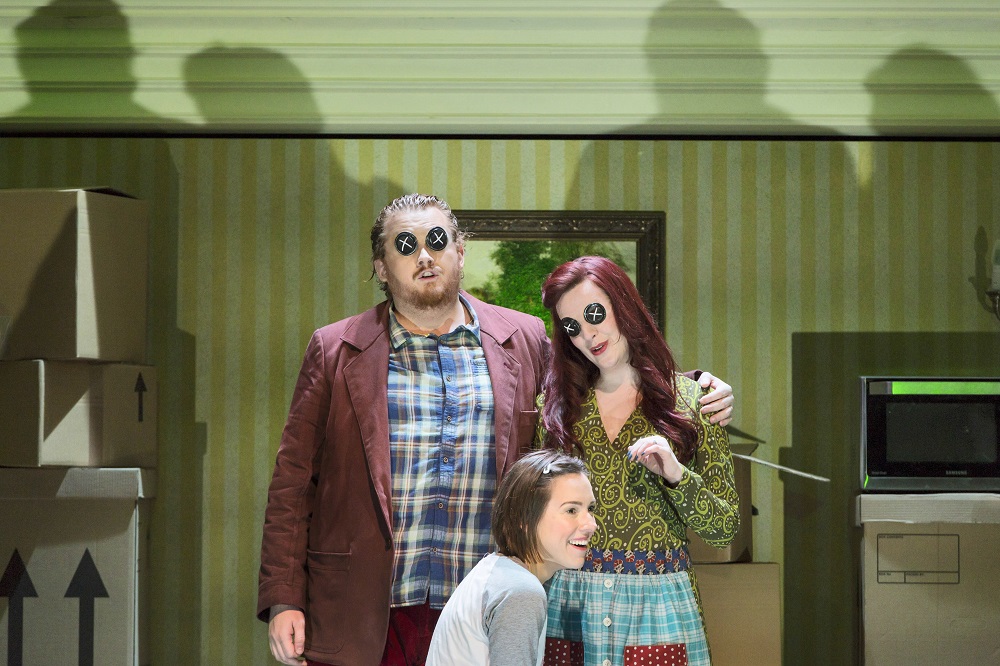 Turnage doesn't really rise to the horror. As in The Silver Tassie, there's a doomy language at work from the start which needs more turns of the screw once Coraline goes through the dangerous door; a slight twist in unisons between low and high woodwind isn't quite enough. The chamber scoring shows a master's hand, with superb writing for oboe, cor anglais and bass clarinet especially, but the substance is less than memorable. There are only so many off-kilter pastiche tangos and waltzes a listener can take. And I suspect children need something more punchy, like Glyndebourne Youth Opera's vibrant adaptation of Janne Teller's novel for young adults Nothing, To make the neighbours interesting before the "real" story begins, for instance, the music should go up a fantastical notch or two. Though Gillian Keith and Frances McCafferty do what they can as retired thesps, and Harry Nicoll's Lithuanian Mr Bobo has strong visual context in which to tell Coraline about his mouse orchestra, the sounds of both scenes don't take off (Nicoll and McCafferty pictured below with Whately and Bevan).
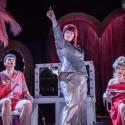
At least Turnage's setting of Rory Mullarkey's libretto is reasonably engaging, and nearly every word can be heard in fine balance with the chamber ensemble under Sian Edwards (who conducted the world premiere of Turnage's Greek three decades ago). We missed the opening in the run-up to Easter; one compensation was to catch a rising star in the title role less well-known than natural stage animal Mary Bevan, who sings in six of the nine performance. Robyn Allegra Parton, due to make her role debut as Zerbinetta in Strauss's Ariadne auf Naxos at Longborough this summer, is no light soprano; she can really push the intensity of Coraline's discontent, yearning and sadness (which is also where the score begins to work some magic). She's convincingly youthful, though whether you buy into this being an 11 year old who still plays with dolls is another matter.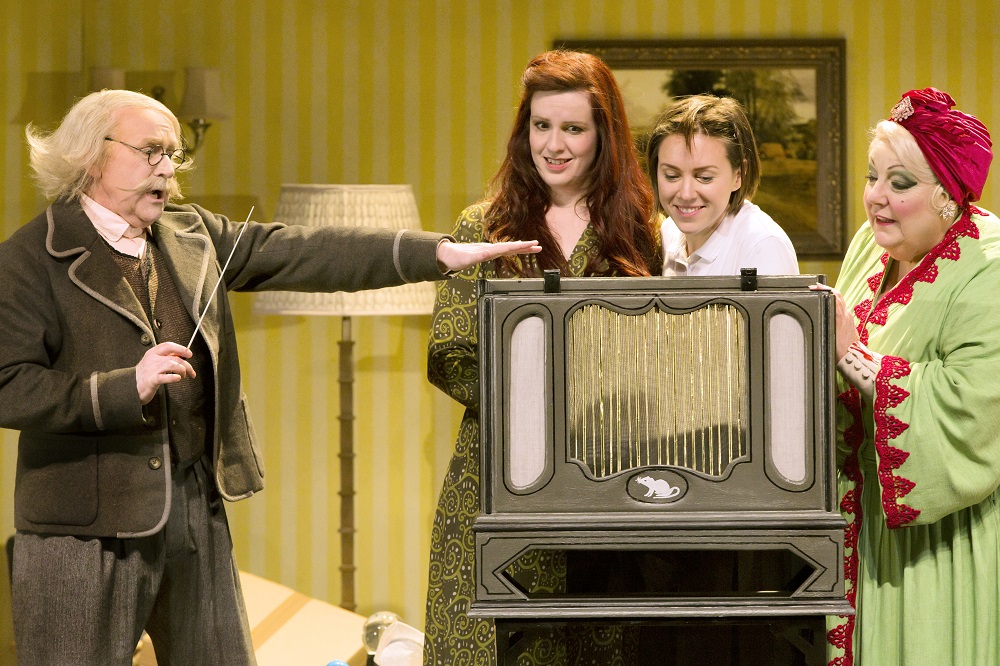 Last night we also heard a second mezzo singing the two Mothers from a score at the side of the stage while a vocally indisposed Kitty Whately acted it all out to perfection on stage. Harriet Williams did a fine job, though all eyes were, as they should be, on Whately, a charismatic presence as both "good" and "bad" mums.
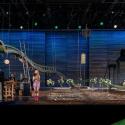
Alexander Robin Baker invests what he can in the slightly underwritten role of the real-life inventor dad and the dispensible figure in the other world, while Dominic Sedgwick completes the trio of Ghost Children, given not quite enough free musical rein in a scene carried by its design. So the cast of seven does a good job. Giles Cadle's series of peculiar rooms make for a series of agile scene changes, though the work of the two "magic consultants" is a little underwhelming. As, I'm sorry to say, is the opera as a whole. Thanks to the subject matter, though, and its fine execution, you won't be bored.