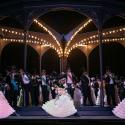
Jonathan Kent’s Manon Lescaut is back for a first revival at Covent Garden. It’s a gaudy affair, and seems calculated to provoke. But there are some interesting ideas here, and the musical standards remain high, even from the lesser-known names of this second-run cast.
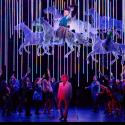
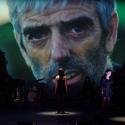
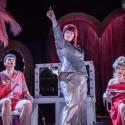
Kent has taken on the laudable task of updating the opera, moving the action away from its 18th century setting to find contemporary resonances. But there are big problems: no one sends their daughters to convents any more, and all the elopements and sexual proclivities, while they might raise eyebrows today, wouldn’t shock in the way the story requires. Kent’s solution is to add a helping of voyeurism into the mix. In the second act, Manon makes a porno, watched by an audience of dirty old men, and the third act plays out as a reality TV show. The idea, it seems, is to turn everything round to the audience, to ask viewers what’s in it for them. It’s a neat trick, but there is little subtlety here, and the concept becomes a distraction – especially since Puccini trains the narrative squarely on the two lovers at its centre. Moving the attention away loses the focus, and with it the emotional engagement.
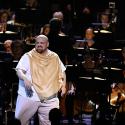
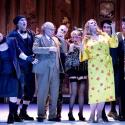
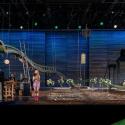
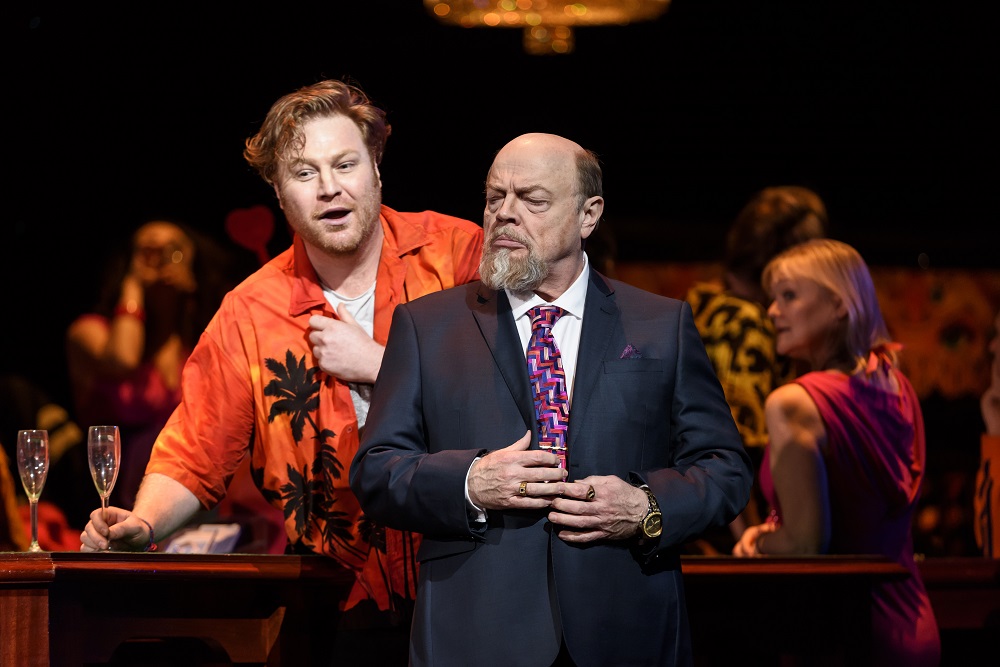 When this production was first staged, in 2014, the lead roles were taken by Kristīne Opolais, Jonas Kaufmann and Christopher Maltman. Those are tough acts to follow, but the revival cast (here directed by Paul Higgins) is a good one, working well as an ensemble, and with all the main singers up to the vocal challenges. The best performance, both musically and dramatically, is from Levente Molnár as Lescaut (pictured above with Eric Halfvarson as Geronte). His is a smooth, broad baritone, perfectly Italianate (though he’s Hungarian), easy on the ear but with plenty of emotion. And dramatically, there is a sense of realism about his expressions and reactions that often saves the moment as the visuals descend into absurdity. The second act has the most garish of Paul Brown’s sets, with Manon’s boudoir a full-sized Rococo room – mouldings, door fittings and all – but in transparent Perspex and positioned high above the stage. Not a promising start, but the early arrival of the Molnár as Lescaut brings instant engagement, and an essential, if slender, thread of credibility.
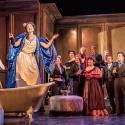
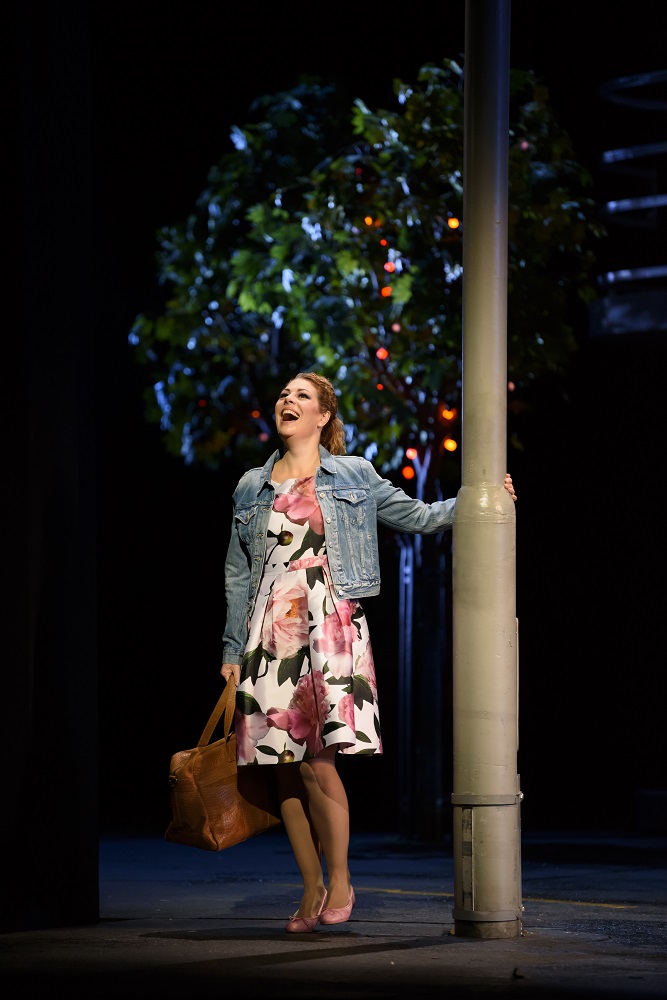 Sondra Radvanovsky is a real find for Manon (pictured right), with impressive vocal projection and tonal support. Dramatically, she is up against the production itself in the second and third acts, but in the fourth, which takes place on a crumbling road flyover, the director has little choice but to hand the reins over to her. It’s a long and painful death scene, but Radvanovsky makes it compelling. Her Des Grieux, Aleksandrs Antonenko, gives her all the support she needs here, though he’s not an ideal romantic lead. His voice is big, but husky and angular. And, again, he is not really helped by the production – the opera needs him as the focus of attention in the opening scenes, but instead we are distracted by the garishly-clad chorus and Manon and Geronte’s incongruous entrance in a (Renault, I think) people carrier. Antonenko is proficient, but he can’t compete, though he holds the stage better when the distractions recede. Eric Halfvarson is well cast as Geronte, all the more sinister for his diminutive stature, and old enough to be credible. An excellent voice too, although slightly strained by the second-act finale.
Antonio Pappano is in his element, and inspires the orchestra to some very fine playing, especially in the vibrant overture and the sumptuous Intermezzo. His feeling for the pace of the drama is ideal; propulsive, but with plenty of detail and poise. Excellent communication too between conductor and cast, another plus for this ensemble reading. All round, this is a musical performance characterised by power, focus and nuance – but it only serves to highlight how those qualities are lacking in the production itself.