György Kurtág is 97 and the last man standing of the post-war generation of avant-garde composers. Last night the Proms staged the UK premiere of his first opera, started in his eighties and premiered in 2018, a setting of Samuel Beckett’s typically mystifying play Endgame. Sadly, for all the brilliant passages of orchestral writing, and top-notch singing and playing, as an opera it’s a bit of a damp squib in which some minutes hung heavy.
Kurtág is one of the great miniaturists – his life’s work is about 10 hours of music – but this opera is two solid hours without an interval (and it is apparently still a work in progress). And hereby lies the problem: this is not an adaptation of the play, it is a setting of roughly 60% of, as far as I can make out, the original script. And as many composers have found out through history, a playscript is not a libretto. Of course, the Beckett estate are, famously, Not at Home to Mr Rewrite, but as a result this strung-out two hours felt like it was holding a tight hour hostage, struggling to get out.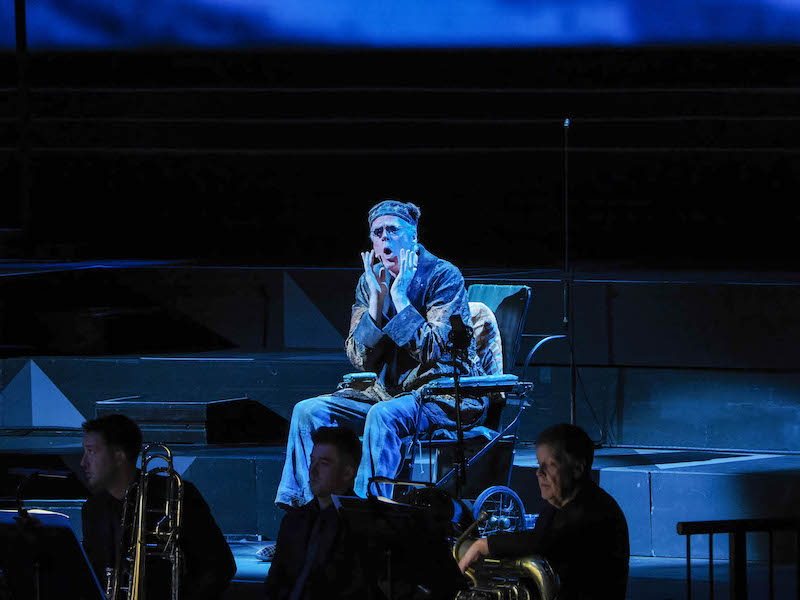 And yet there was so much to enjoy. The orchestral writing is never less than inventive and at times outright astonishing. The ghostly sonorities Kurtág conjured up from a pristine BBC Scottish Symphony were coloured with cimbalom, bayan (a Russian accordion), oh-so-delicate percussion and a beautifully precise low brass section. I would love to hear an orchestral suite of 10 short extracts, I think it could be fabulous. The final two minutes, in particular, were bleak and beautiful and very moving.
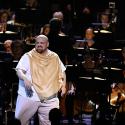
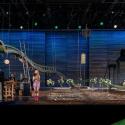
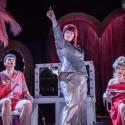
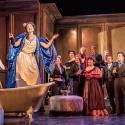
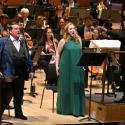
The singers were also terrific, although typically with Beckett they were hamstrung in conventional theatrical terms. Hilary Summers and Leonardo Cortellazzi as the decrepit Nell and Nagg spent their entire stage time in giant rubbish bins. Frode Olsen’s Hamm (pictured above by Sisi Burn) never left his bath chair. Only Morgan Moody as the servant Clov was able to move around, limping painfully around the stage. The story, such as there is, involves Nell and Nagg (Hamm’s parents) squabbling then dying, then Clov threatening to leave, forcing Hamm to face his own loneliness. But it all happens so, so slowly. At one point, the four words in the synopsis, “Clov prepares to leave” took 20 minutes of stage time to happen – or not.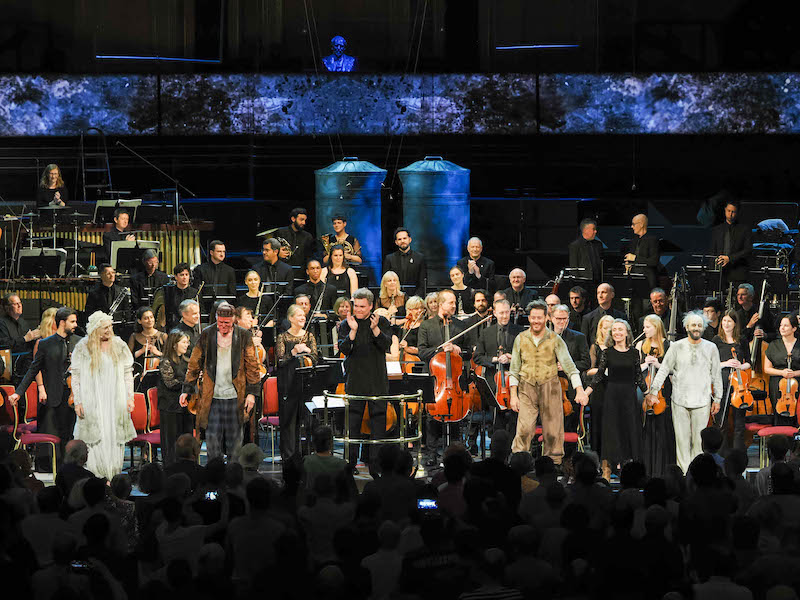 Even so, Summers and Cortellazzi found a real pathos in their childish bickering in the face of annihilation. And Frode Olsen, in a massive role, managed to endow a whiny old man with despair but also grace. Their singing was aided by subtle amplification, and Kurtág’s transparent scoring made sure that every word of the French text was audible. Conductor Ryan Wigglesworth had barely two bars in a row in the same time signature or tempo, controlled things masterfully.
Endgame is in many ways the antithesis of Le Grand Macabre, by Kurtág’s lifelong friend Ligeti. The latter is loud and brash and full of incident, profligate and maximalist, perhaps to a fault. But by contrast Endgame, where each minor incident stretches out to breaking point, left me gasping for something to happen. Endgame speaks profoundly about old age, frailty, fragility and death with a chilling, disconsolate musical sparseness. But for the steady trickle of people leaving early, who perhaps had not done their homework, I felt a certain sympathy: I’m a fan of modernist music and still spent too much of the time inwardly shouting “get on with it!”.