Expect no cliches about toreador pianism. Red-earth flamboyance is not Javier Perianes' style, and the seven dances he offered in his programme - eight including an encore - by fellow Spaniard Manuel de Falla were not the most consistently engaging part of the recital. The lucidity he brought to Chopin and Debussy proved of the essence, though, and something absolutely fresh and new.
Perianes is serious but modest and likeable in demeanour, coming straight on to the stage to probe the interior worlds of Chopin's C minor and F sharp minor Nocturnes, Op. 48. Composed in what one can only call the composer's full maturity - he was 34 and died only five years later - they demand rigour from the pianist, a fine balance between introspection and tragic high profile. Perianes never lets the right-hand melodies sound sentimental; a strength can give way to a glimpse of far-remembered hills in a reprise, but you sensed that the first of the two would start scaling a granite cliff-face as it - always amazingly - does at its heart.
The Third Piano Sonata from the same year extends its generous material in ambitious and surprising ways; Perianes was once again at the heart of its tough poetry, but while the hands are free, and capable of hig-speed grace, a visible sign of tension in the upper body didn't always let the inspiration fly as it must. And you could hear the voice of Elisabeth Leonskaja, a master interpreter of this work, echoing her master Sviatoslav Richter - a pianist who, like Perianes, favoured the Yamaha piano - exclaiming "what, you don't love Chopin enough?" as Perianes ignored the first movement's exposition repeat.
 Ineffable highlight of the evening was the balance of imagination and artistic discipline in Debussy's three Estampes. "Prints" or "etchings" indicates that nothing should be too hazy in these impressions of the orient, Spain and rain on gardens. Perianes doesn't so much adopt Boulez's tenet of "burning off the mists" in Debussy as let the dances and human figures emerge with absolute clarity. There were sometimes at least three sound-layers at work.
Was Falla always bound to fall a bit short after this? "Montañesa," the third of the Four Spanish Pieces composed in Paris not long after the Estampes, sounds like a watercolour imitation of "La soirée dans Grenade," the second of the Debussy pieces. And you can tire of the triplet-ornamented hallmarks in Spanish dance (though not in Granados's hugely ambitious Goyescas, the true masterpiece of the 20th century Spanish piano repertoire, which I'd love to hear Perianes tackle in its entirety). With Perianes pulling his punches just a little in the fandango and farruca numbers of the three pieces transcribed from the ballet The Three-Cornered Hat, the official final fireworks didn't quite rise as high as they might.
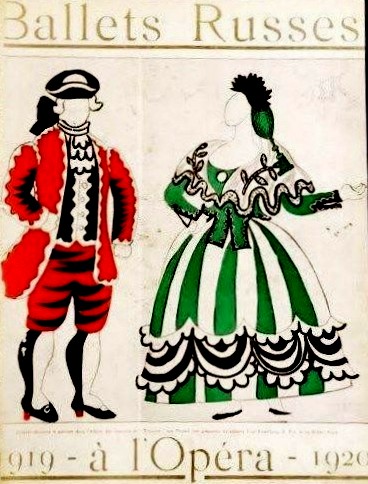
Given that The Three Cornered Hat had its premiere from Diaghilev's Ballets Russes a century ago this May (programme cover for the 1919-20 season with designs by Picasso pictured above), a better companion than the slightly samey Four Pieces might have been the three piano numbers from Stravinsky's Petrushka. But the encores gave us a delicious encapsulation of the evening's three masters, including Debussy's "La fille aux cheveux de lin" from Préludes Book 1 - pure poetry with judicious shadowing from the sustaining pedal - and a Falla dance that caught light - literally so, as this was the "Ritual Fire Dance" from the ballet El amor brujo - Love, the Magician. And love this magician we did when his playing was at its most thoughtful.