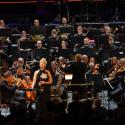
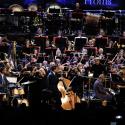
Trickling or gushing in torrents, lapping rhythmically or slopping out all over the floor: water was the constant, flowing steadily through the centre of the Hallé’s Proms performance. In a tough year for audiences, Manchester’s finest and music director Mark Elder gave us a crowd-pleasing programme for a Saturday night: an atmospheric tourist-trip that took us from Respighi’s sun-drenched Rome (with its many fountains) to Puccini’s Paris (the Seine seething gently in the strings), with a quick stop in the domestic fantasy-landscape of Dukas’s Sorcerer’s Apprentice.
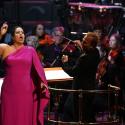
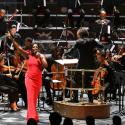
The Paris of Il Tabarro is not the Paris of La bohème. The bustling cafes and streets are just a memory (wryly nodded to in the Ballad-Seller’s song, beautifully delivered here by Jung Soo Yun) of a city of which these characters are the dregs, the offcuts, the invisible fringe. Puccini’s transient community of stevedores, barge-owners and bag ladies have none of the bohemians’ threadbare glamour. Theirs is a claustrophobic world stripped of normal human rhythms, where even waltzes droop and stumble, and the pulse of life is the churning, swelling movement of the Seine itself. 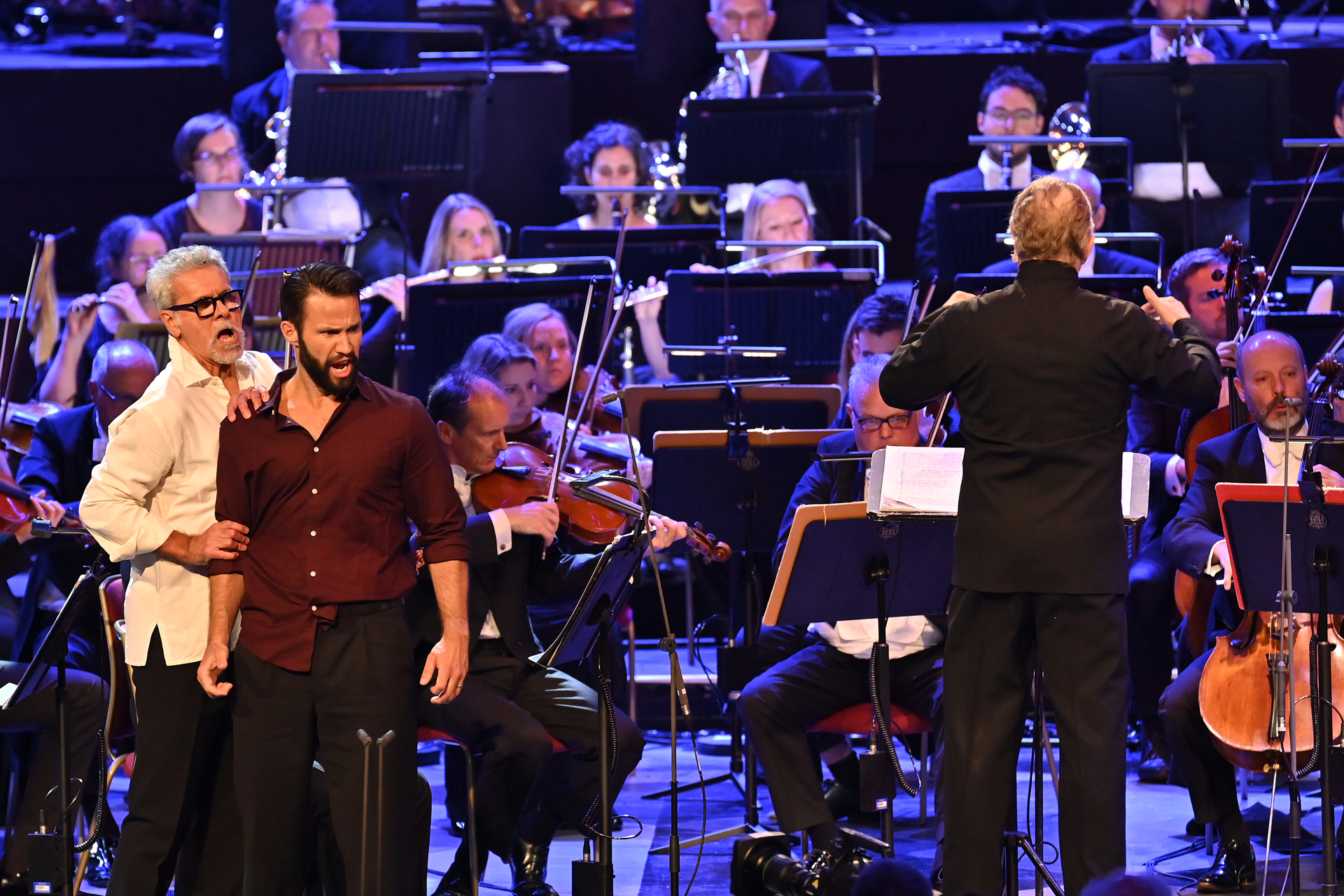 Elder’s river surged brown and muddy – the matte shades from strings and brass all the more striking after the clarity of Respighi’s waters. A seemingly cursed cast-list had changed more often than Musetta’s outfits in preceding weeks, losing both the men from its central love-triangle, as well as mezzo Daniela Barcellona. But the final line-up – Natalya Romaniw’s Giorgetta the woman torn between Lucio Gallo’s Michele and Adam Smith’s Luigi – was an effective one.
Last seen blustering in the Royal Opera’s Don Pasquale – a scorned husband of quite a different kind – Gallo found real intensity for his Michele, the persuasive sincerity of his “Perchè non m'ami più?” and “Resta vicino a me” ripped shockingly away in the violence of his outburst: “Sgualdrina!” Even the coy surtitle translation – “Strumpet!” (for those lucky ones for whom they were actually visible) – couldn’t damp the ferocity.
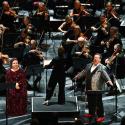
Pushed to his limit by the hall’s size and the orchestral force behind him, Adam Smith’s Luigi (pictured above with Lucio Gallo as Michele) tended to be a little dry at the top. But it was a stylish performance, with Romaniw’s dark, luscious tone seeping into any cracks in their Belleville duet and love scene – the heart of the drama dramatically as much as musically. Annuziata Vestri was a deliciously wild-eyed La Frugola, with a charming cameo from Laura Lolita Peresivana and Ryan Vaughan Davies as the young lovers. 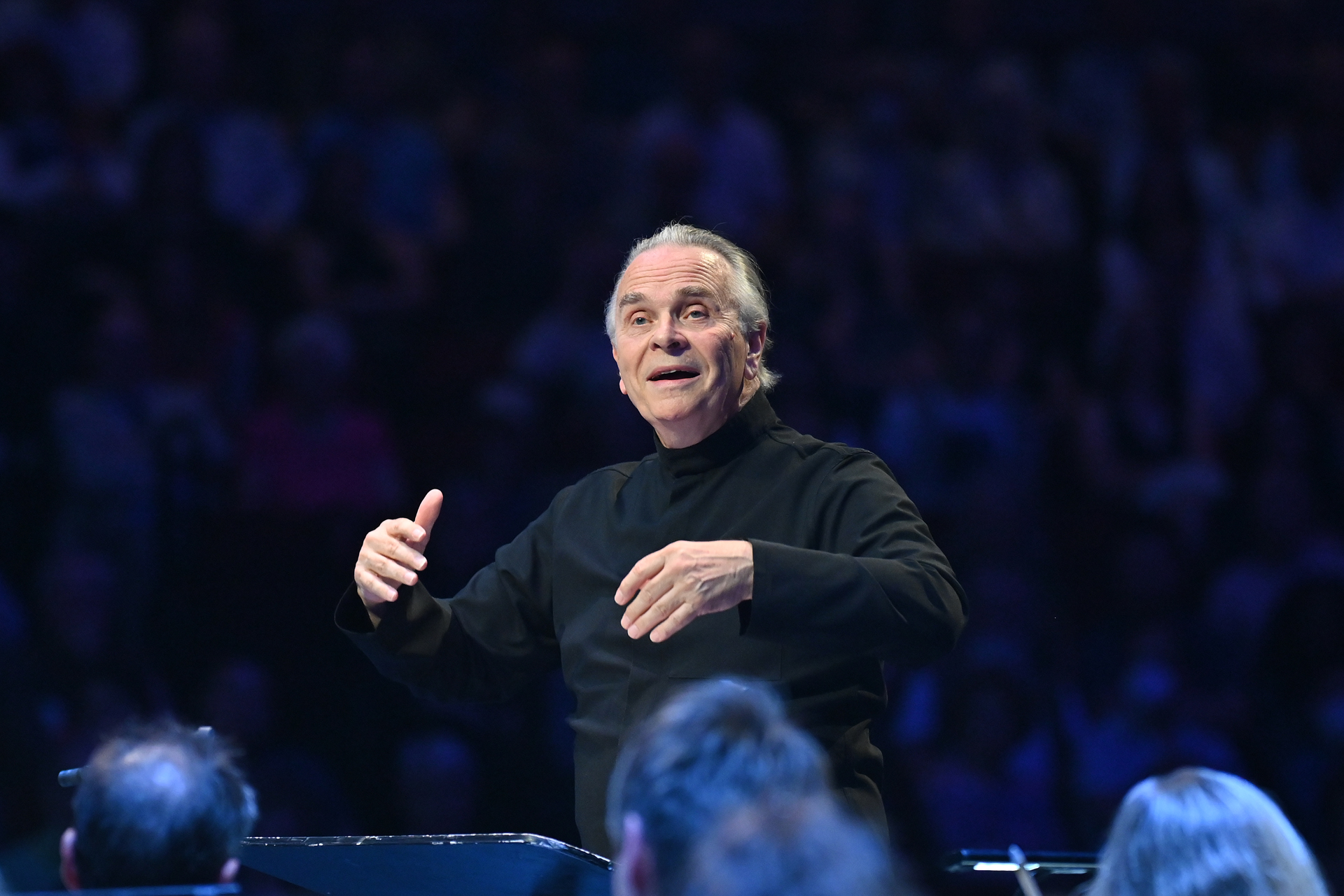 Off-setting Tabarro’s bloody corpses, the Dukas was about as sophisticated a musical joke as you could imagine – a glint in its eye that never broke into outright laughter. The Hallé’s woodwind were an ensemble of character actors for Dukas’s cinematic score, while strings and harps bathed all in a hazy swirl of magic.
And there was plenty of haze left over for Respighi’s dawn over Valle Giulia – dewy-cool initially, solo oboe summoning visions of Classical nymphs and shepherds – before shimmer turned to glitter in the scherzo (triangle battering our ears with brightness) and the blinding radiance of the Trevi Fountain, magnificent in brass fanfares and swelling pomp. Bells tolled us finally into silence, and you could almost believe you’d emerge into scented gardens of the Villa Medici rather than the sterner landscape of Kensington Gardens.