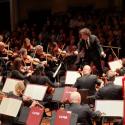
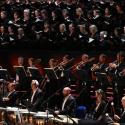
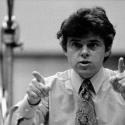
It’s hardly surprising that at the grand old age of 86 Bernard Haitink can pack them in at the Albert Hall so that there’s no room left in the Arena and those still queueing 10 minutes before the concert have to go up to the Gallery. But he was also doing it back in 1978, when I went to hear my first Mahler “Resurrection” and found myself too late in the queue for the best standing-place in the hall, stuck in the rafters for the one and only time (never again). The Chamber Orchestra of Europe wasn’t even born then. For the decade after its foundation in 1981, it was a young orchestra; no more, though there are still a few junior players of the highest quality. And that was always the polished essence of a classic Prom.
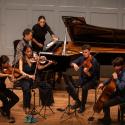
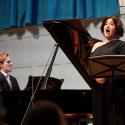
How they project into the vasts, this hyper-alert and nuanced group, so engagingly led by violinist Lorenza Borrani. When you marry the essential qualities of lucidity and humanity with the greatest living Mozart conductor – now that Abbado and Mackerras are no more – and a pianist as sensitive to her colleagues as Maria João Pires (pictured below), the results can be as near to perfection as the most human concertos in the repertoire allow.
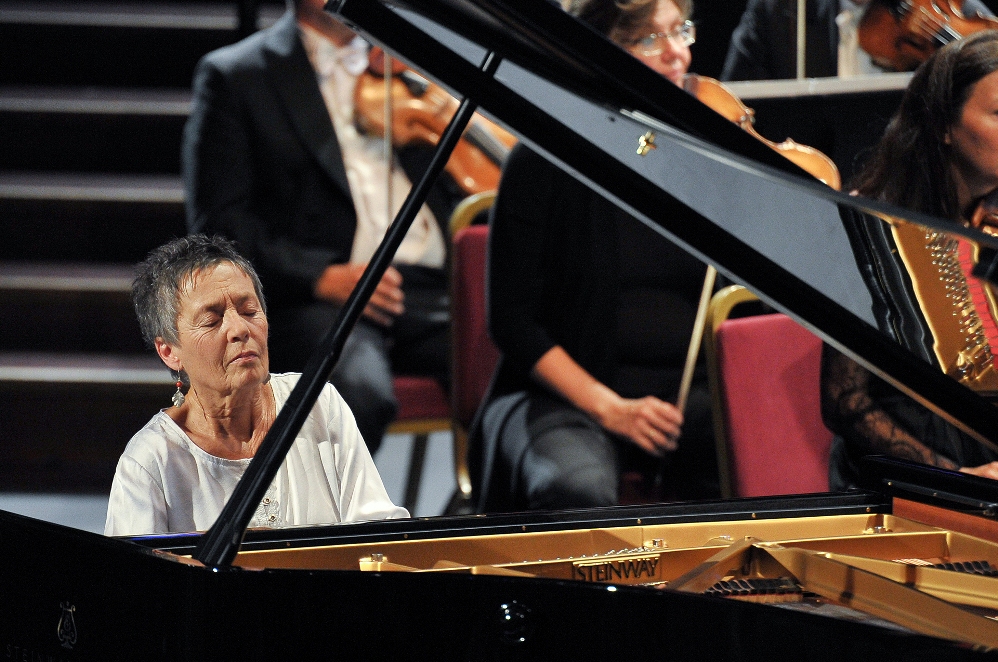 The A major Piano Concerto K488, third of the Mozart series I’ve heard this Proms season, brought a lighter touch than Leonskaja, Dutoit and the RPO in No 22 – though that had been a special, romantic case – and a much greater partnership than Fray, Salonen and the Philharmonia in No 24. As Pires returned to the loveliest theme in Mozart’s first movement and the woodwind followed suit, I thought I’d died and gone to heaven.
Yet perhaps there are limits: I wanted the rondo finale to extend its good humour even further towards the end; Haitink’s perfect equilibrium was never going to push it further.
The same was true of the second and fourth movements of Schubert’s Ninth Symphony after the interval, prettily anticipated at the start of the concert by the more modest C major of the Overture “in the Italian Style” (almost as witty as Rossini, but not quite; the overtures to Semiramide or.La Cenerentola might have been a better choice). The dissonances that disrupt the jaunty tread of the Andante con moto – in itself more keenly sprung than I’ve ever heard it, and delectably phrased by supreme oboist Kai Frömbgen – left it unscathed, and if the finale was the only movement where Haitink didn’t observe the repeats, he didn’t justify the truncation with anything sufficiently out of the ordinary in the coda. I also wanted more Austrian swing and heart in parts of the Scherzo. If you listen to Abbado's Schubert Ninth on CD with the Orchestra Mozart, one of his last performances, you'll find him going that extra inch in each of these instances.
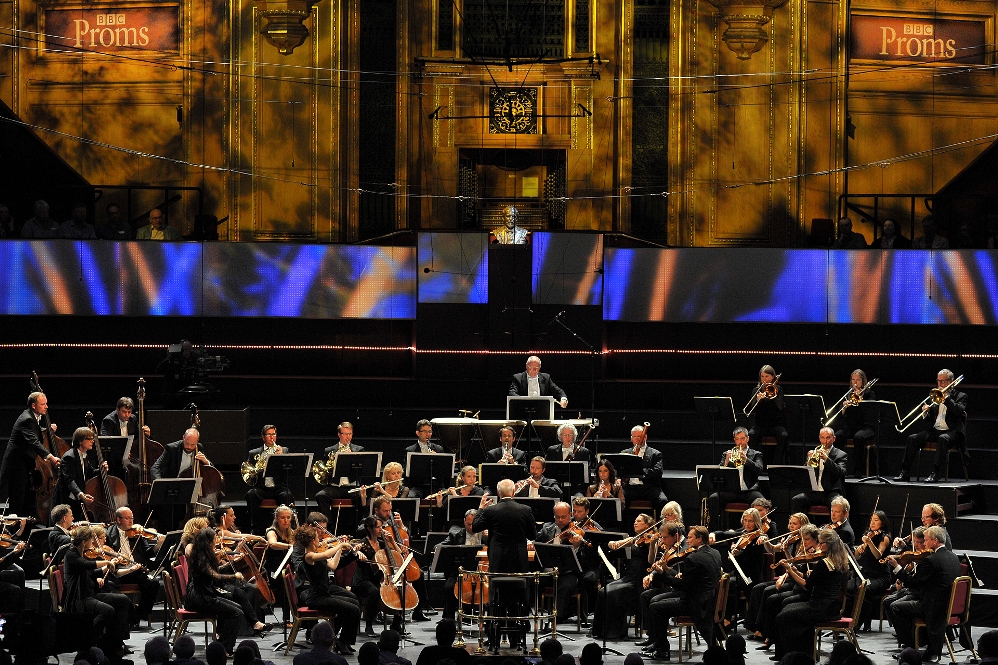 No doubt Haitink had made conscious choices throughout: at first rehearsals, I’m told, he always gets the orchestra in question to just play through and adjusts his interpretation to the sound. The COE’s is essentially crisp and sophisticated, albeit with humanity to match, so maybe it wouldn't have been right to reach for the heights.
Better, surely, to concentrate on the many virtues: the essential lightness of the brass, with the subtlest of horn and trumpet tuckets joining the second-movement oboe theme, and first trombonist Helen Vollam – well known to BBC Symphony Orchestra followers – adding a lovely high line to the woodwind in the Scherzo’s trio; the sheer effortless perfection of the woodwind, always clear and bright; the natural articulation of the strings; and even the focus of John Chimes’ timpani in subtler moments. Even among world chamber orchestras – given what we heard earlier in the season from the Mahler Chamber Orchestra with Leif Ove Andsnes, and the unstinting pleasure to be had from the Scottish Chamber Orchestra under Robin Ticciati, about to play in the Edinburgh Festival – it’s pointless to talk of a “best”, but there is none better than this engaging ensemble.
- Listen to this Prom for the next month on the BBC iPlayer
- David Nice's blog on the Chamber Orchestra of Europe's 30th birthday concert in 2011
Read theartsdesk's reviews of other concerts from the BBC Proms 2015