There is no mistaking Christian Gerhaher. His voice is a light, agile baritone, and it is utterly distinctive. He is a very verbal singer, and is as happy delivering his lines in a toneless parlando as he is full voice. But when he does increase the colour, a burnished, slightly nasal tone appears, rich but still light. Emotions are always controlled, and the passion will often build gradually but steadily.
All of which made this Schubert programme ideal, with Gerhaher tracing the emotional journey of each of these short Lied, without ever imposing his own drama, and without a hint of irony.
Pianist Gerold Huber has been Gerhaher’s regular accompanist throughout his recital career. The two clearly work well together, the impeccable communication between them never requiring eye contact. But it is not a partnership of equals, and Huber always stays in the background. He sets the scene for each song, and fills out the colours and rhythms, but you rarely get the feeling that the piano part is being interpreted with the insight and passion as the vocal line.
The programme consisted of four Rückert settings, all tentatively dated to 1821-23, followed by Schwanengesang, the posthumously assembled collection of Schubert’s final songs that hold together through their shared sense of muted regret and distant longing. That is the mood of the Rückert songs too, so an air of melancholy, though not outright tragedy, hung over proceedings.
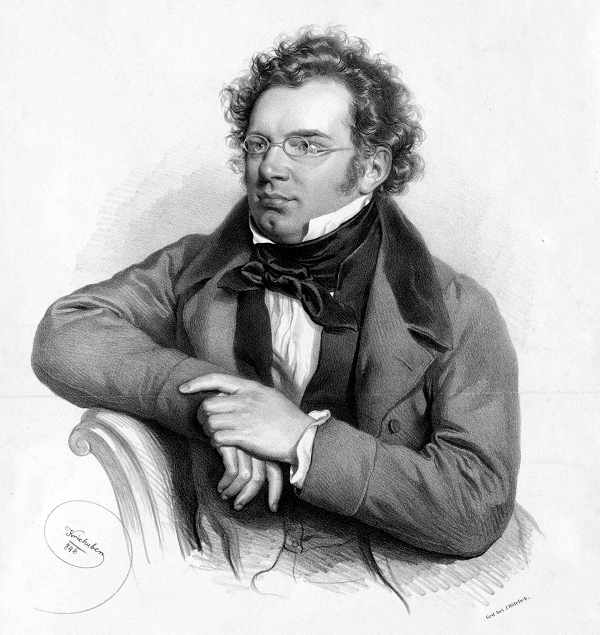 The first Rückert song, “Sei mir gegrüsst”, perfectly demonstrated Gerhaher’s distinctive technique. At the repeated refrain “Sei mir gegrüsst”, Gerhaher begins with little tone, but then rises to his distinctive full voice for the final syllable. An emotive effect, and one only he could manage. Gerhaher and Huber are always discreet with rubato, rarely slowing for the forceful final verses. But Gerhaher sometimes draws out cadences, as in "Dass sie hier gewessen", adding a greater feeling of sincerity to the formulaic repeating line. A standout among the Rückert songs was "Du bist die Ruh". Schubert here is more simple and clear, the textures even and quiet. No parlando here, Gerhaher delivered the entire song in a round, quiet tone, elegant and direct.
Moving to Schwanengesang, the famous “Ständchen” was presented in a similarly clear tone by Gerhaher, his distinctive timbre an asset in such a familiar work. The following “Aufenthalt” was similarly strident, but even more emotive, Gerhaher succumbing for the first time to the music’s dark emotions at the line “my grief remains forever the same.”
“Der Atlas” was forceful from Gerhaher, while “Ihr Bild” was again presented with a paradoxical mix of quiet dynamics and rich tone. The next three songs all evoke the sea and rivers in their imagery, and Schubert accompanies each with rolling waves of sound from the piano. Huber’s reticent approach, sufficient until here, lacked the tone painting that these required. “Die Stadt” especially suffered from a lack of visual imagination, for an accompaniment based on the steady stroke of an oarsman in evening light.
“Der Doppelgänger” was another classic Gerhaher performance, opening in a mournful, narrow tone and gradually building in intensity, his masterful diction of Heine’s poem integrating his range of colours and dynamics. The collection closes with an oddity, “Die Taubenpost”, an energetic number that acts as light relief. But Gerhaher was persuasive as ever, and the song gave both him and Huber a chance to show a more dynamic side. This too was energised by Gerhaher’s crisp diction and light but subtly shaded tone, qualities that proved ideal for tackling all the emotional and musical challenges of Schubert’s diverse cycle.
- Christian Gerhaher and Gerold Huber repeat this programme at the Wigmore Hall on Thursday 1 December
- More classical reviews on theartsdesk