There are many things that drew me to re-imagining Noel Coward's The Rat Trap, an early play from the author of such enduring classics as Private Lives and Hay Fever.
First, since the age of 16 I have been a die-hard fan of his. To have this opportunity (with his estate's blessing) to explore in depth an unknown work of his with the hope of making it more immediate for a modern audience and to actually collaborate with Noel Coward is an honour.
Ninety-nine percent of Coward's career happened after he wrote The Rat Trap at the age of 18. So for me, it was a rare gift to have the knowledge of how such ongoing themes of his as marital discord and the plight of being Bohemian in a conventional society were expressed near the start of his career as they would be further explored in such later works as Private Lives, Present Laughter and Design for Living.
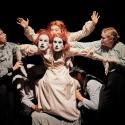
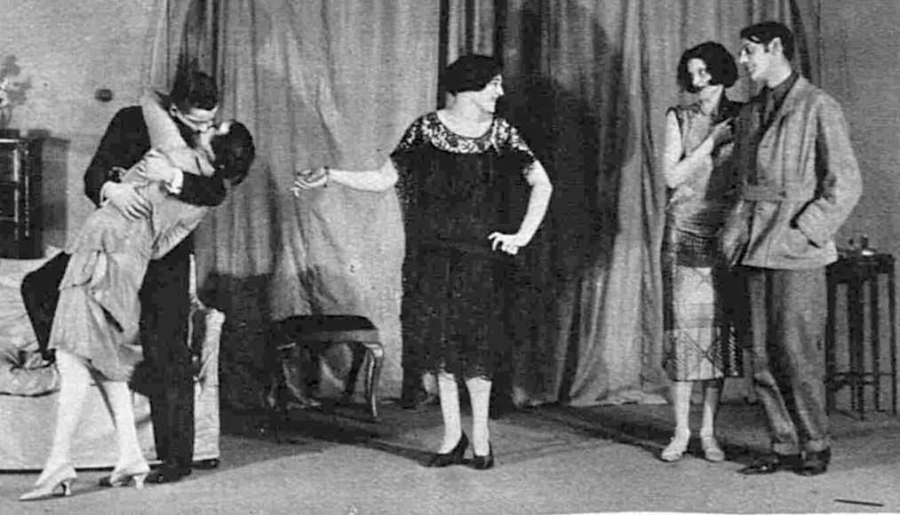
Thus, in many ways it was hindsight guiding me through the play and helping the younger Coward to focus on what we learned from him as he matured as an artist. Within The Rat Trap are signposts of what he had in store for audiences over the next 50 years. It's all there waiting to be mined. (Pictured below, from the original production, 1926: from left: Sheila and Keld, Olive, Naomi and Edmund, image by Sasha (Alexander Stewart), The Sketch)
After a few false starts trying to dive into the play, I found a deeply satisfying solution: I retyped the play in its entirety: not just reading it passively and taking notes, but actually writing the play with my own hands - typing every word, constructing every sentence. By the time I had finished, I felt as if I knew the play as well as anyone could.
I then read through what I had "written" and gave thought to what the play is really about, what should I amplify and what are the parts or aspects of the play that I might minimise, if not eliminate.
I hate to admit this, but the cutting of the play was actually fun. So often in modern drama, plays have too many endings, or scenes go on long after their point has been made. This was a chance to look at a script 100 years old and written by a teenager and to say, in essence, "Sir Noel, you were certainly talented and full of promise, but you weren't there yet! Trust me on this, ok?"
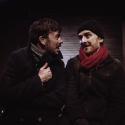
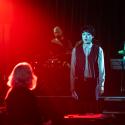
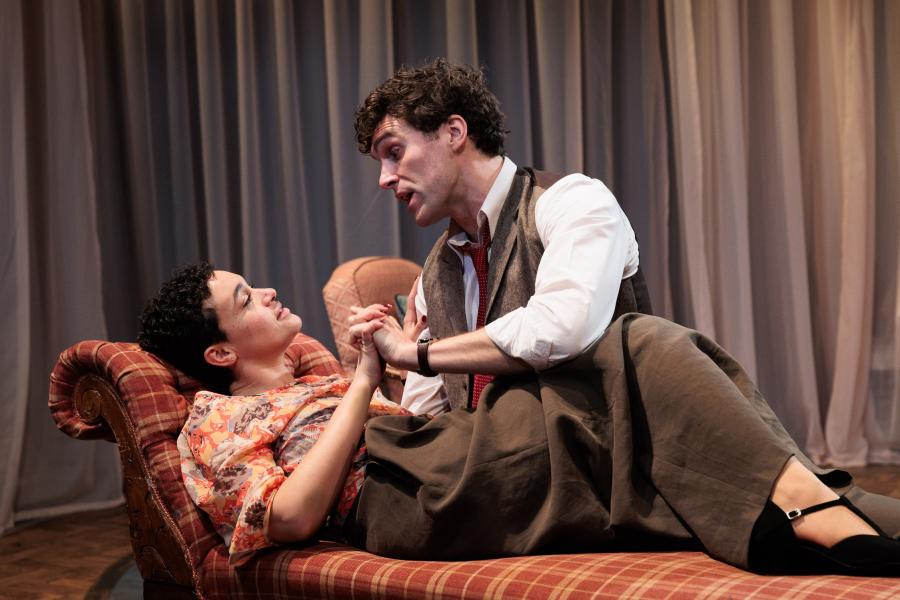
Speeches throughout could be reduced to one or two crisp and compact sentences, and numerous attempts at jokes could only be described as aspirational sophistication. As his playwriting career progressed he was known to be merciless with cutting his own work or at the very least rewriting it to make it better, to make it work. In other words to make it successful. (Pictured below, Lily Nichol, Ewan Miller, by Mitzi de Margary)
With those thoughts in mind, I began my work. It took about six weeks after receiving the assignment to my delivering the manuscript to the folks at the Coward Estate. A few days later, they gave their complete approval of the work. And then... nothing. But Never give up hope.
After about two years, Ashley Cook, an enterprising producer fresh from an off-West End triumphant two-part adaptation of The Forsyte Saga, was in search of lost plays from the past which would still be relevant today. He found one in The Rat Trap. We met, and he had some questions about the script which I easily answered, and he suggested the dynamic Kirsty Patrick Ward as director: we were off and running.
There were no readings or workshops or anything. It was only at the first table read on the first day of rehearsal that I actually heard the play out loud. Our youthful ensemble led by Lily Nichol and Ewan Miller as the troubled couple in love found not only Coward's expected sardonic wit in their characters, but also the divisive Ibsen-esque passion which fuels their volatile relationship.
As playwrights, we spend a lot of time inside our own heads, imagining our characters voices: the confrontations, the humour, the drama and so on. But hearing other voices speaking one's own words (or in this case those of your deceased collaborator) for the first time is an out-of-body experience. The Rat Trap at this point no longer belongs to the author/s but is now shared with the actors, the director and the designers. It becomes the foundation upon which my fellow creatives have utilised their considerable talents to bring the play to life, just as I have used mine to do the same for one of Noel Coward's earliest efforts.
It's been a joy and a privilege.
Bill Rosenfield is an American playwright long-resident in London. His concert adaptation of High Spirits, based on Coward's play Blithe Spirit, runs 4-15 February at City Center in New York.