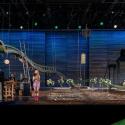
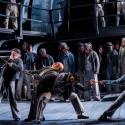
Early 2026 was always going to trump late 2025 in one respect: total clarity in a much-anticipated concert performance of Janáček's teeming masterpiece over Katie Mitchell's disastrously overloaded Royal Opera production. And it resplendently did, with Marlis Petersen free to capture every facet of the 337-year-old heroine seeking regeneration, only to decide that life beyond the normal human span isn't worth the candle. Simon Rattle predictably got the London Symphony Orchestra to burn for him in this strangest and most innovative of scores.
Quibbles first, though. If Mitchell made a complicated plot unintelligible with extra storylines, the avoidance here of any concert staging beyond what the singers could bring to their roles behind the music stands defused Janáček's still-wordy distillation of Karel Čapek's genius drama, a conversation piece injected with the supernatural (note: Richard Jones is still interested in directing the play).
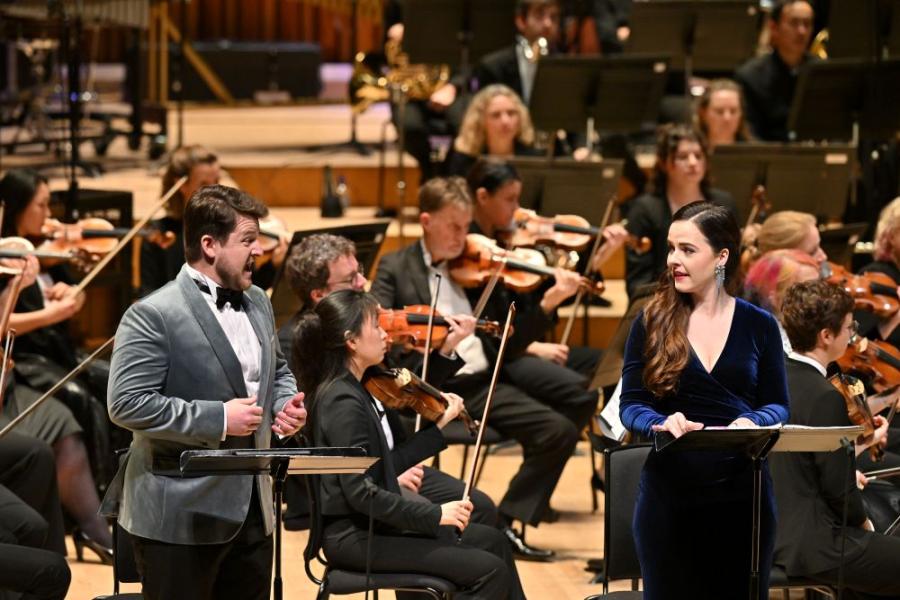
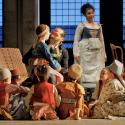
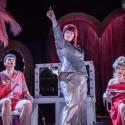
Singers left the stage when they should still have been there - noticeably absent when, for instance, Marty shamelessly asks young lovers Janek and Krista (Vit Nosek and Doubravka Novotná pictured above) if they've slept together yet. And the coup of the original drama, making up for what Mitchell felt was lack of feminist drive in the work, has Krista burn the Makropulos recipe for eternal life, the flames heard in the music - but who, unfamiliar with the drama, would have known that? For the full story, you need to see on DVD Nikolaus Lehnhoff's searing Glyndebourne production with Anja Silja, where Krista is onstage with Marty to comfort her towards the end. Here she was nowhere to be seen.
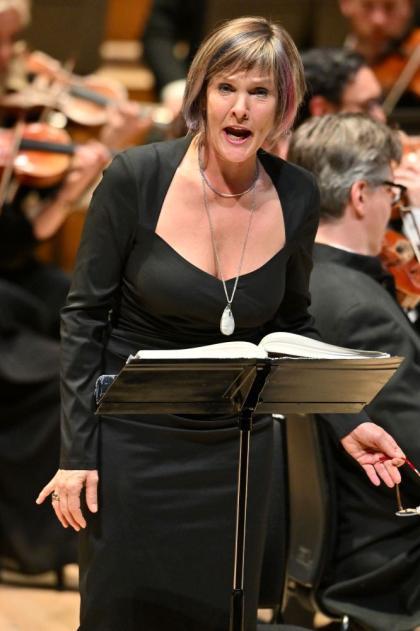
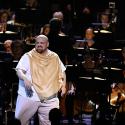
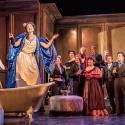
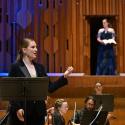
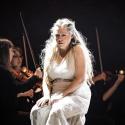
Petersen (pictured left) sang the role in Vienna last December, a fine production with variable performances thankfully televised, so it was surprising to find her more bound to the score than expected. Still, we had all the variety of her responses - wistful, tender, cruel, comical, other-worldly at times. She worked evocatively with Rattle for the moments when time almost comes to a stop in the first and second acts, and pulled all the stops out when lyricism finally gets the upper hand. But it's always there, and Rattle's balances made us hear even more than the procession of themes which poured forth at white heat when Janáček was composing the opera. I couldn't see whether Eivind Ringstad was playing the viola d'amore which highlights deepest emotion; in any case, it rarely stands out in the textures as Janacek hoped it might.
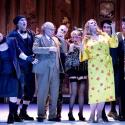
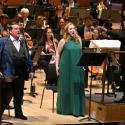
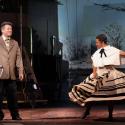
The Prelude blazed, both onstage and off, with the fanfares of EM's 16th century past eventually coming closer as the present day fades for her in the final scene. Peter Hoare set up the chatty legal drama brilliantly in the first scene, with Aleš Briscein burning with a brighter, more strenuous but flawlessly negotiated flame as the impetuous (and, as Marty sees it, rather silly) Albert Gregor. There was huge lyric promise from Novotná as ingenue Krista and resonant darkness from Svatopluk Sem's bullying Baron Prus. Character-tenor cameos in the tragicomic role of Count Hauk-Šendorf, the one-time lover of gypsy Eugenia Montez, remain strong in the memory - the late Graham Clark and Robert Tear among them - but Alan Oke made the role totally his own, sparking vivacious moments from Petersen too (the two pictured below).
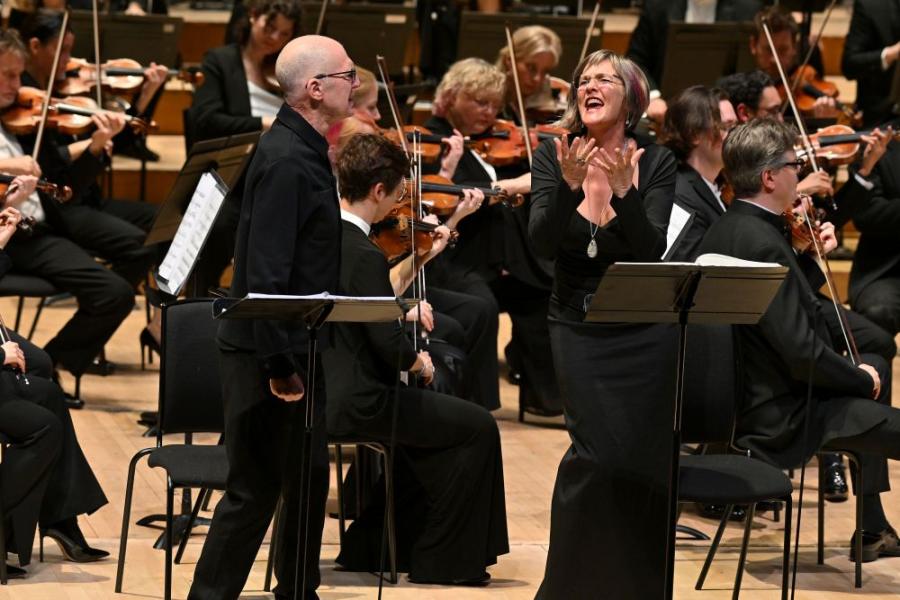
The visual barrier between Marty and the men who make fools of themselves in her presence, separated either side of the conductor, finally came into its own as she stands alone, and they turn to become phantoms for her (a role usually taken by a small male chorus). The LSO strings were beginning to tire by this stage, no wonder, but if there was no burning document on stage at the end, the blaze of brass kept the bigger dimension massive to the last. There may be lighter ways of handling the score, but Rattle's is peerless on its own terms. Catch the second performance if you can.