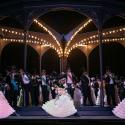
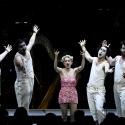
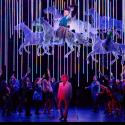
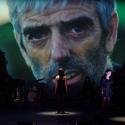
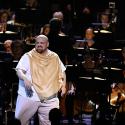
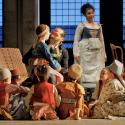
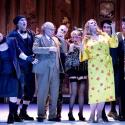
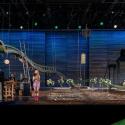
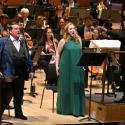
This season opener was about closure too. The London Symphony Orchestra was back at the office last night, but this fresh stretch of concerts opened with an opera it has been performing while also acquiring a suntan in Aix-en-Provence. A new cast of singers replaced gaudy costumes and facepaint with elegant evening garb, and semi-acted their roles on the thin strip of forestage not occupied by the massed ranks of the orchestra.
The concept of the concert performance has never had more enthusiastic support than at the recent run of seven Wagner operas, amounting to a gazillion hours without anachronistic sets and look-at-me lighting. As with Wagner, the colour is all there in the music with the other bicentenarian Verdi, and without having to compete with Robert Carsen’s production replete with nudes and clown kit, the LSO took this opportunity to act out its part in the clash of cymbals, the moan of the oboe, the skip of the first fiddles. From the first dread chords of the brass, the sun-baked, storm-lashed streets of 16th-century Mantua were colourfully summoned.
 For this the audience has Gianandrea Noseda to clap on the back. Any anxiety that there’s not much to feast the eyes in a concert rendition of an opera was allayed by an athletic, even gymnastic performance from the Milanese conductor. From his apprenticeship in St Petersburg under Gergiev, he has spent much of his career in the pit, where there is presumably less room to dance and pivot, crouch and jerk like a demented trampolinist than there was here. For half this performance his sharp features radiated intense immersion in the drama as the Gilda of Desirée Rancatore (pictured © Allegri) fell in love for the first time, Dimitri Platanias's Rigoletto bemoaned the theft of his daughter and Saimir Pirgu’s nonchalant Duke hymned the flightiness of womankind. Famously committed, Noseda outgunned himself so that in the pause between the second and third acts, he looked for all the world like a knackered boxer staggering back to the ringside corner to recuperate. Magnificent.
This mostly southern European cast swaggered and glittered and emoted with an easy access to passion somehow beyond their northern neighbours. Rancatore’s “Gualtier Maldè!... Caro nome” soared and swooped. In his “È il sol dell'anima" Pirgu radiated bronzed self-assurance of a lyric tenor in love with his talent to seduce. As for the splendidly square Platanias, to embody every doting father’s nightmare he never let his sad clown face slip as Monterone’s doomy curse worked its inexorable spell. A rare night at the opera found the men of the LSO Chorus by turns whispering and bawling. The applause at these things often seems to endure past the last train home, but this time, perchè no?