

The political wheel has turned full-circle. When Our Country’s Good was premiered in 1988, it was a barely-veiled protest against Thatcher’s slash-and-burn approach to the arts in general and arts funding in particular. It couldn’t have returned at a more apt moment. Once again the arts are being forced to make a commercial case for their existence, to claw and squabble over scraps of government money, while the newspapers are filled with photos from Syria, of the apparent destruction of Palmyra. If the arts really are “an expression of civilisation” then we’ve rarely been in more trouble.
A superb ensemble cast blarney and rage and love with desperate intensity
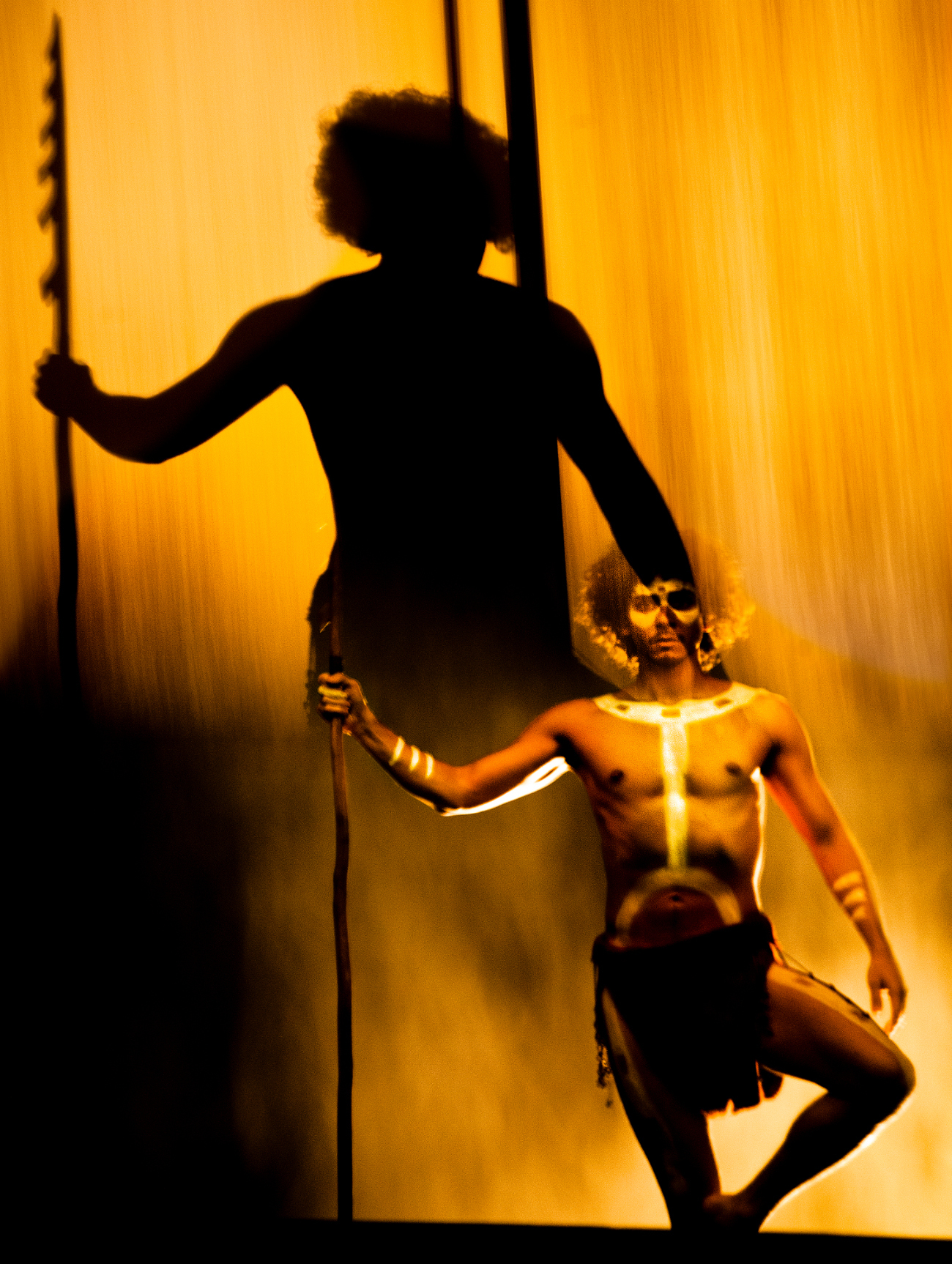
Timberlake Wertenbaker’s passionate theatrical polemic takes us back to the Australia of the First Fleet, bedding us down among the officers and convicts that made up those initial, unwilling settlers of Sydney’s inhospitable harbour. Peter McIntosh’s designs give us a bright, hot landscape, abstractly suggested in a vast projected backdrop, pitted and striated in the thick brush strokes of Aboriginal art. In front, a clever revolve rises and falls as it rotates, capturing the above-deck/below-deck duality that persists long after we escape the confines of the ship.
It’s a shame that casting in this new National Theatre production forgoes the traditional doubling of roles that sees prisoners become jailers in the simple act of donning a red coat or a hat. It’s a gesture that cuts to the essence of a play that questions so persistently the conventions, opportunities and ideologies that keep us locked in a social hierarchy. But if status is less fluid in director Nadia Fall’s hands than often, the pay-off is an additional bleakness, a cruelty that traps our convicts twice over.
 Reduced to its dramatic skeleton of plot and themes, Our Country’s Good can sound unbearably earnest – an A-level civics lesson in narrative form. It’s in the playing, the theatrical experiences moment to moment that it lives. The deft pencil-sketches of character that fill out the supporting cast are tender and funny, whether the dogmatic John Wisehammer whose book-learning only extends as far as the letter "L" on account of only having the first volume of the dictionary, or voluble young Ketch Freeman, the unwilling hangman who only wants to do the best job he can.
It’s in these generous, backstory-loaded cameos that Fall’s show comes into its own. A superb ensemble cast blarney and rage and love with desperate intensity. Tadhg Murphy is all nervous energy and misguided endeavour as Freeman, his undimmed sweetness sparring (and ultimately supporting) Jodie McNee’s bruised, feral and vehemently Liverpudlian Liz Morden. Transformed by a wooden “fan” her transformation from violent kneejerk rage to soft dignity is beautifully managed. Only Ashley McGuire's Dabby Bryant, longing for her childhood Devon home, comes close to her for pathos.
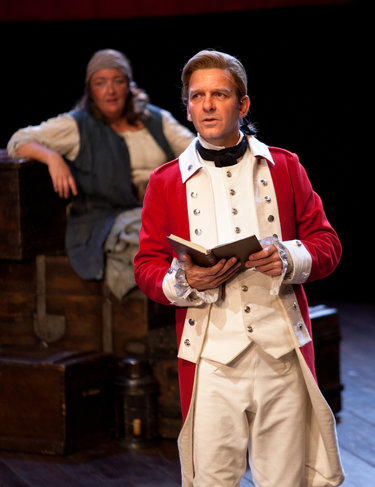
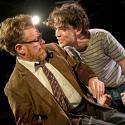
Fall humanises the priggish Second Lieutenant Ralph Clark (Jason Hughes, pictured below) with some deft touches. His “prayers” over his wife’s photograph are rather less than spiritual, his courtship with Mary Brenham (a slow-burn performance from Caoilfhionn Dunne) deliciously tentative. Hughes’s plain-dealing, plain-speaking charisma dominates scenes among the officers, filling the dramatic void where Cyril Nri’s gently ineffectual Captain Phillip should be.
 Much has been made of the production’s music in the run-up to opening night – the debut stage score from Catatonia and Radio 6 Music’s Cerys Matthews. Folk-tunes jostle with delicate contemporary pop songs in a tuneful melee, but the dominance of music in the production fatally unbalances the action. If our characters have such easy and instinctive an outlet for self-expression in song, then why do they need the play at all? Already emancipated in song, the characters anticipate their own theatrical growth and assurance. It doesn’t help that Matthews’ music (much of it beautifully sung by Josienne Clarke) often errs towards the literal in its response to the play’s action, seizing on the emotional moment with a melodic urgency that comes dangerously close to Les Miserables at times.
A briskly unsentimental programme essay by Roger Graef is the play’s natural epilogue, turning up the house-lights of contemporary reality just as Phyllida Lloyd’s recent Donmar Shakespeares set in a women’s prison have done. His tale of the institutional suspicion among officials at Wandsworth Prison of a recent inmate production of West Side Story is depressingly and distressingly predictable, but also a necessary reminder that today’s cultural vandals don’t all come equipped with red coats.
- Our Country's Good at the National Theatre until 17 October





Add comment