There can be no questioning trumpeter Håkan Hardenberger’s extraordinary mastery: his big, unforced sound, mellifluous legato, athletic virtuosity and utterly controlled high notes. But his well-attested commitment to the avant-garde led the Wigmore audience to stay away in droves from his recital last night, leaving the hall insultingly empty for such a star performer.
But the programme didn’t just look intimidating on paper, it turned out to be somewhat hard work in practice, not only for those Wigmore patrons who prefer Beethoven and Schubert, but even for those of us with an enthusiasm for newer music.
After George Antheil’s mercurial 1951 Trumpet Sonata, the main work of the first half was Staffan Storm’s Three Autumns. This is a monumental 35-minute piece that explores a massive range of techniques and textures, showing a good feel for large-scale architecture, but which is ultimately too long for itself.
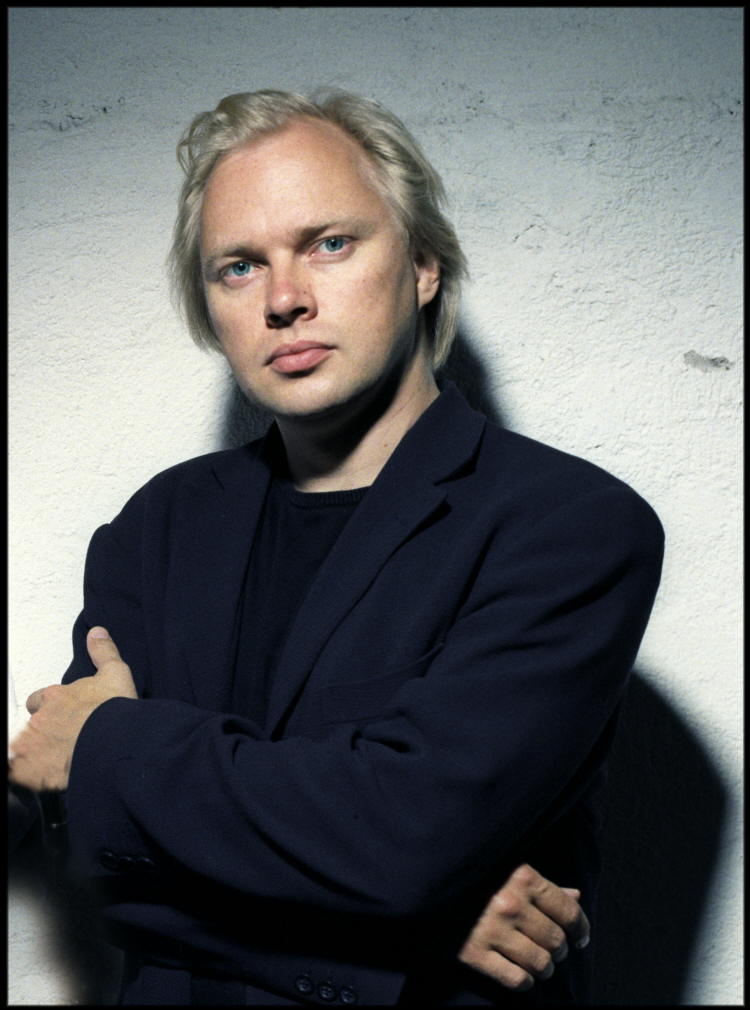 Storm, a Swedish contemporary of Hardenberger, wrote the piece for the trumpeter and his recital partner, pianist Roland Pöntinen (pictured right), in 2016, and the two players clearly enjoy its strenuous demands. Beginning with an insistent high E, reiterated through double- and triple-tonguing, the music moved through sections of stormy passion, beguiling improvisation, effulgent melody and hard-earned serenity. Hardenberger dealt with the many challenges with a cool efficiency, where Pöntinen was scampering around the keyboard in a part that was similarly taxing.
The piece was enjoyable, the performances scintillating, and yet the slightly baggy form left me with the feeling I’d have enjoyed it a lot more if it had been about 10% shorter.
I had a similar feeling about the centrepiece of the second half, Berio’s Sequenza X for trumpet and piano resonance. It might seem impertinent to have doubts about this avant-garde classic, but for all its sonic delights the musical material seems overstretched for its 18-minutes duration. Berio’s central idea – which is a brilliant one – is for the trumpet’s notes to be captured by the resonances of the piano (on which Pöntinen was silently depressing notes). Hardenberger sometimes played to the audience, sometimes directly into the lid of the piano, interspersing these isolated notes with streams of faster notes. But for all his whimsical characterisation and magisterial tone, Hardenberger couldn’t persuade me of the musical narrative behind the notes.
Some of the more interesting pieces came, ironically, with Hardenberger offstage. After the Berio he took a much-deserved breather and Pöntinen played three short solos: the ineffable Wasserklavier, an allusive Sciarrino miniature and a high-spirited rendition of George Gerswhin’s Swanee, based on the composer’s piano-roll recording. This music provided a welcome variety of harmonic soundworld, and a break from the hardcore modernism dominating the rest of the programme.
After this, Pöntinen’s own L’éléphant rose was a disappointment, the music far less interesting than the title promised. The Seagull, by Swedish jazz pianist and composer Jan Lundgren, had a 1950s smokiness and melancholy, Hardenberger floating his high notes effortlessly and faultlessly. They finished with a sincere reading of Ravel’s Pavane pour une infante défunte, Hardenberger’s muted playing humble and eloquent, and Pöntinen enjoying the rare opportunity to project a singing line.