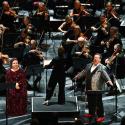
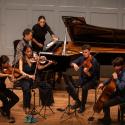
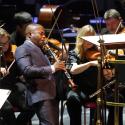
Fast making a name for themselves in contemporary chamber music, The Hermes Experiment players here give a wonderful debut recital at the Wigmore Hall, With a range of pieces as eclectic as their line up – harp, soprano, double bass and clarinet – the quartet perform a multifarious array of works, from Lili Boulanger’s lilting, soothing "Reflets" to composer and visual artist Oliver Leith’s intriguing and weirdly catchy Uh Huh Yea, written for the quartet in 2019.
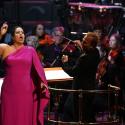
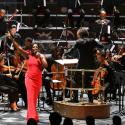
The recital opens with a new arrangement by soprano Héloïse Werner (pictured below) – who co-directs the group as well as singing in it – of Baroque composer Barbara Strozzi’s "Tradimento," from her 1659 work Diporti di Euterpe. The words of the piece focus on the emotions surrounding betrayal, and Werner’s arrangement incorporated improvisatory elements from the musicians, which heighten the sense of bewildering anxiety depicted in the text. Double-bassist Marianne Schofield’s arrangement of Anna Meredith’s Fin like a Flower, set to text by the artist Philip Ridley, has a gently bubbling accompaniment from the three instrumentalists beautifully matched with Werner’s rich soprano. 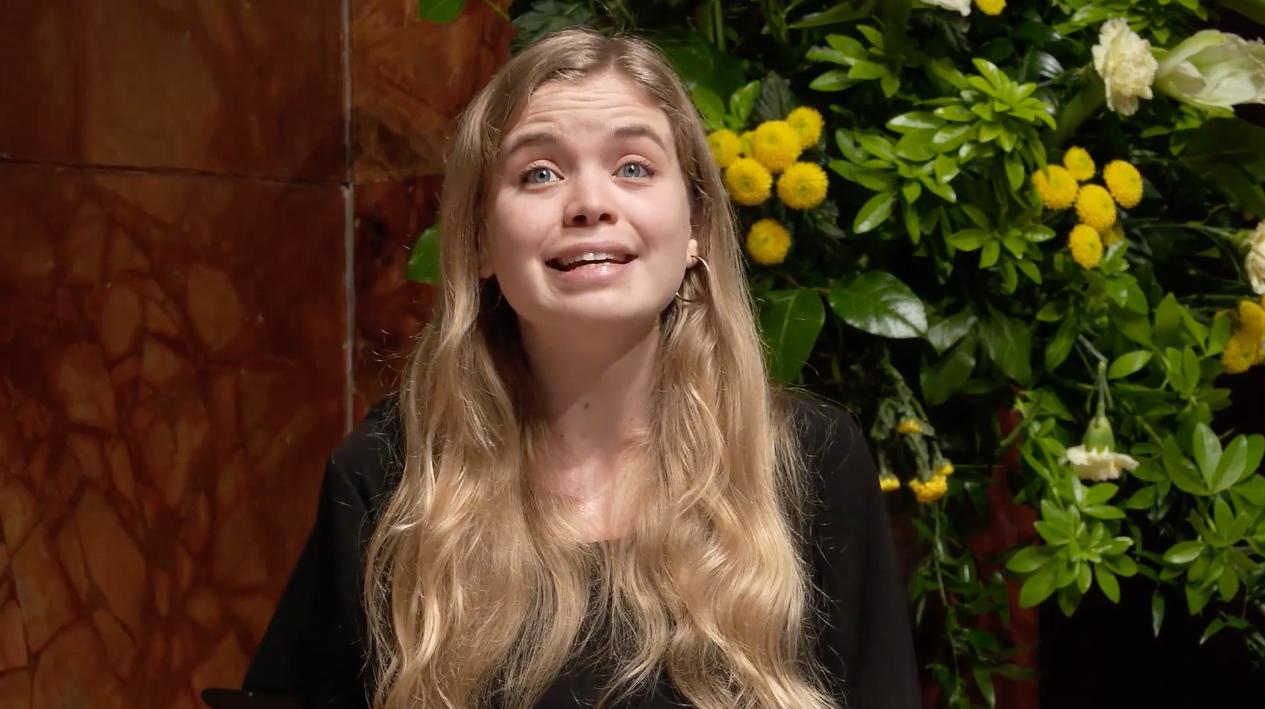 A piece recently composed for the group, Alex Mills’s Saṃsāra – named after a Sanskrit word meaning "endless wandering of the soul" – is set to both sacred Buddhist text, and a specially commissioned poem by Konstantinos Papacharalampos. As harpist Anne Denholm explains, the piece depicts the ‘full and endless cycle of earth, life, death and rebirth’. This is a deeply moving work, with stunning performances seen from all four musicians. The splashes of colour from the instrumentalists beautifully evoke the rain mentioned in the first section, "Morning," before moving into more vivid and driven passages. Werner – who also plays some hand-held percussion for this piece – sings with impeccable diction and a dusky, haunting tone.
Freya Waley-Cohen’s song cycle We Phoenician Sailors, set to poetry by Octavia Bright, depicts a love affair in three movements, from initial infatuation to a bitter break up, with each piece distinctly evoking the emotions from the heady harp and clarinet flurries of the first movement to the juicily jarring bars of the last. The final movement of another song cycle, clarinettist Oliver Pashley’s arrangement of Helen Grime’s Council Offices is a moving portrayal of a woman’s traumatic memories of miscarriage. 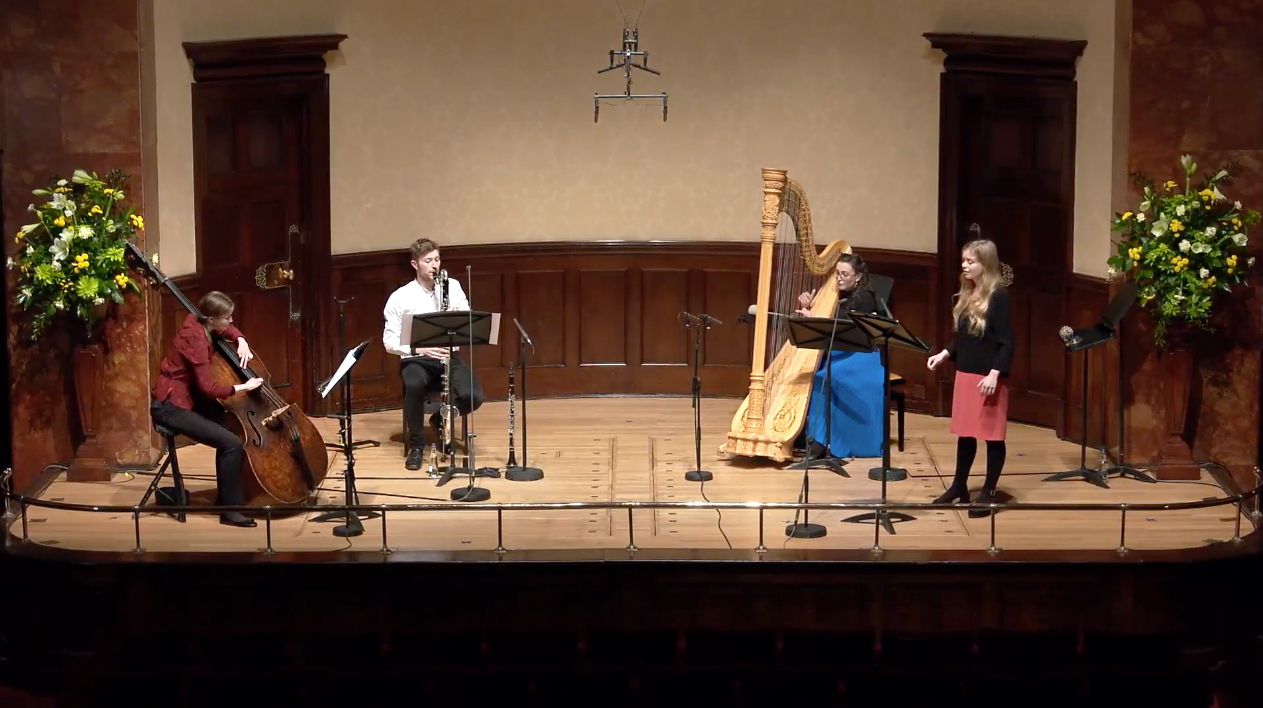 Misha Mullov-Abbado ‘s The Linden Tree opens with a gorgeously simple harp and clarinet duo before the jazz-tinged double bass line joins in. Jazz influences abound, especially in Pashley’s brief cadenza finishing the instrumental interlude between verses four and five. Though the melody and lyrics are somewhat sad, depicting someone who has lost their lover in a war, the instrumental writing provides a touch of hope.
The fact that The Hermes Experiment comprises such unusual mix of instruments, one not often written for, is proving to be a real blessing. The wealth of new music written for this group – a quartet still very much in its infancy – is already quite remarkable. I’m sure we can expect great things, not only from the quartet, but from those who have the privilege of writing for them.