It was a daring idea to mark Ravel’s 150th birthday year with a single concert packing in all his works for solo piano. Jean-Efflam Bavouzet knows them by heart, has bags of charisma and energy, so why not? I could give more than one reason, but the main problem was that while Bavouzet perfectly embodied Scarbo, the monster-Puck of Gaspard de la nuit, and other nocturnal flitters, he seemed careless with Undine and her watery companions, of which there were many.
So much felt too loud - does Bavouzet's choice of a Yamaha piano, Richter's favourite, have anything to do with it? - and rushed. No-one minds wrong notes, but when they seem to come from a snatched approach, the liabilities become tiresome over three long parts – above all in the encore, what I presume was Ravel’s own transcription of La Valse, maybe with additions, a mad sweep which was more than a bit hit and miss, however much it wowed the crowds. 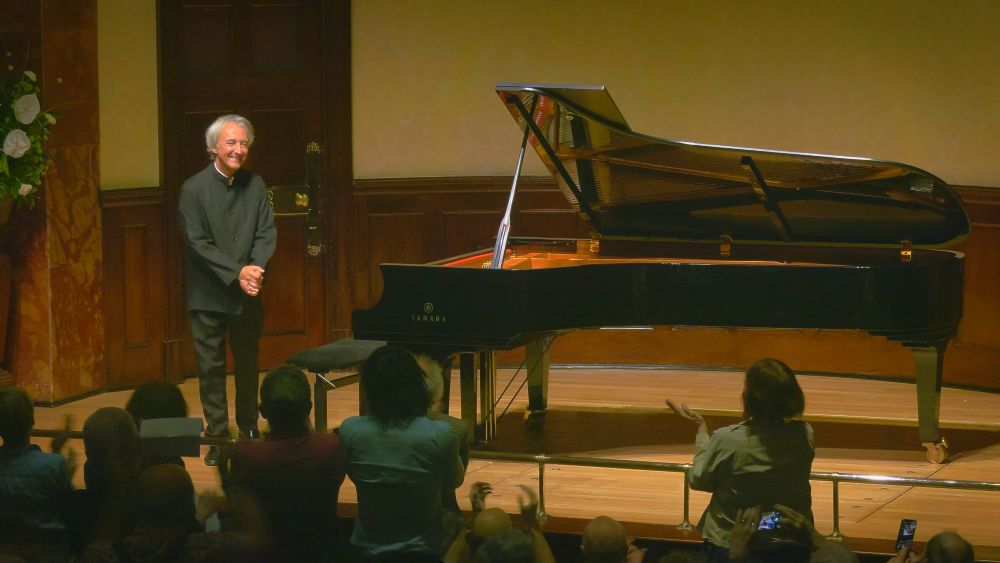 Leading question, though: does "the complete Ravel" from first piano work to last suit an entire evening? Yes, though his music in this genre may not range as wide or, for the most part, as deep as Debussy's (I long for a programme featuring both books of Préludes and the 12 Études). There's a danger, once Ravel invented a new style for both in Jeux d'eau - Debussy tried to take the credit, which may have been why the two fell out - of too much water music, but by placing the Valses nobles et sentimentales before Gaspard de la nuit in the central part, when it comes after chronologically, we enjoyed a different element. Still better would have been to spread it all over two evenings, and include the music for two pianists.
Undeniably the start was startling: too many writers toe the line of the Sérénade grotesque being a derivative work, citing Chabrier. Surely not. Bavouzet emphasized how far ahead of its time it is (1893, a decade and a half before Prokofiev's Suggestion diabolique). This, the Menuet antique (early neoclassicism) and the Pavane pour une infante défunte, lucidity incarnate, made a fine group. Miroirs has its far share of water-games, but also extends the range: Bavouzet's articulation of the repeated notes in the "Alborada del Gracioso" was stunning. It cropped up again in "Scarbo", the sensation of the evening. It's always felt episodic to me after the hauntings of "Undine" and "Le Gibet", but not here; and in those two, Bavouzet simply didn't go under the surface (to hear Benjamin Grosvenor in "Undine", which you can do on YouTube, is to witness a miracle). 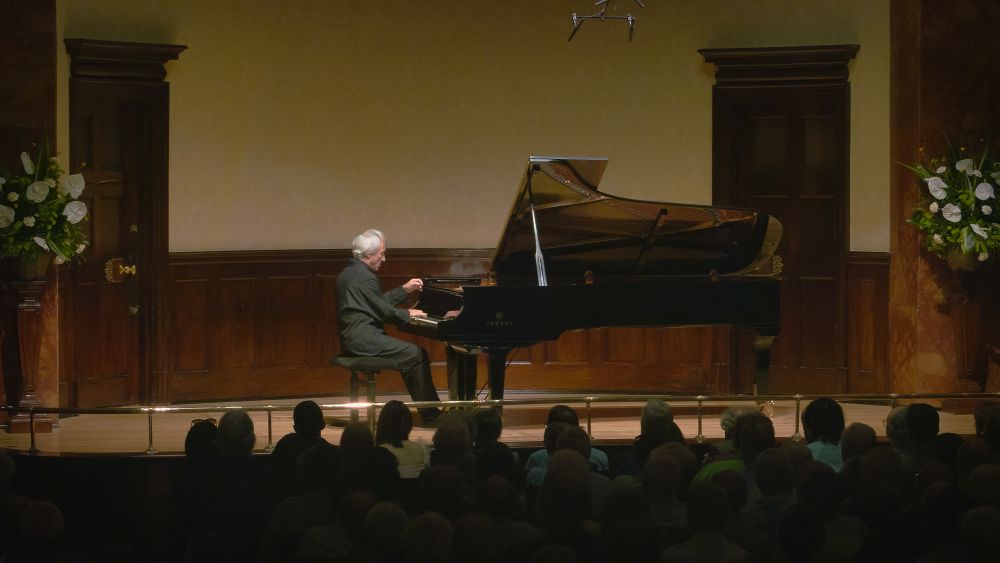 Surely Bavouzet's clarity and deftness would make the most of Le tombeau de Couperin, Ravel's last major work for solo piano, with its poignant homages not just to the 18th century but also to friends lost in the war? Sadly not; the Prelude was way too fast and charmless. But the concluding Toccata, one of the two pieces in the set that Ravel didn't orchestrate, brought back the demonic magic. Very much an oeuf de curé; let's hear what Bertrand Chamayou makes of the very same programme in the Wigmore at the end of the year.