

How to Live on Planet Earth should be compulsory viewing in every classroom, boardroom, town hall and government office on the globe. Billed as a “how-to video” the documentary offers hope as well as a realistic view of the dire straights our planet is in.
Director Fredi Devas worked with David Attenborough on seasons two and three of Planet Earth, recording the stunning beauty of nature so as to bring home what our gung-ho economic policies are destroying, but without suggesting any realistic alternatives.
In How to... Devas takes the next step. Focusing on three key questions – How to value nature? How to feed the future? And how to feel human? – the film offers practical solutions without shying away from the scale of the challenge.
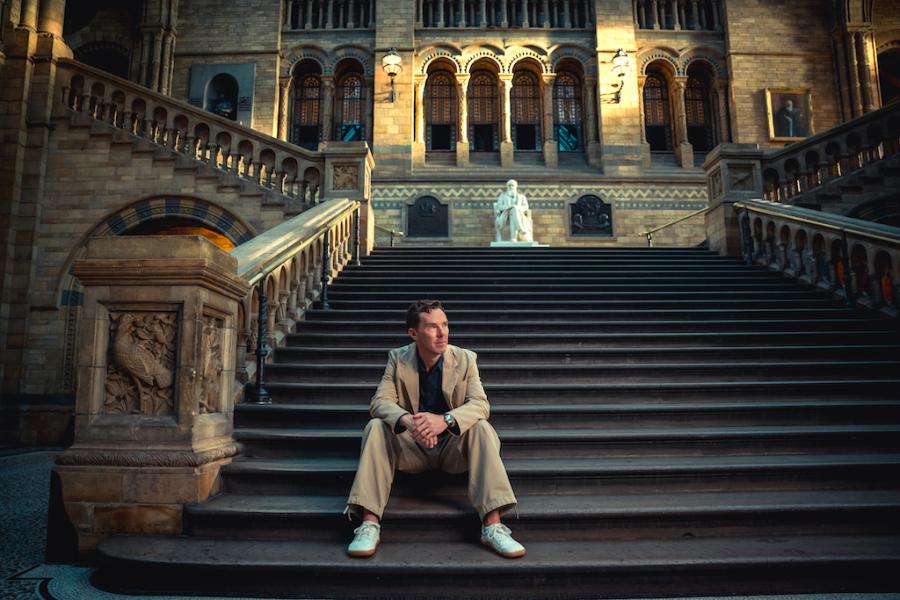
It opens with narrator Benedict Cumberbatch sitting on the staircase of the Natural History Museum, a building full of the bones and carcasses of dead animals – a fitting place to discuss mass extinction and the death of a planet. His manner is somewhat chummy and the message veers towards the sound-bite simple. Yet the script avoids being overly simplistic and Cumberbatch is such a convincing performer that it doesn’t feel patronising.
“What if there were four chapters in the story of a planet like earth?” he asks. “1) a time before life. 2) A time when life evolves. 3) A time when intelligent life evolves but, unrestricted, its impact comes to threaten the planet and 4) a time when the intelligent life becomes wise and works out how to be a positive force on its planet. Earth is at chapter three and we are the only ones capable of moving it on to chapter 4. But are we really able to do that?” The crux of the matter, as he sees it, is whether homo sapiens is wise enough to change tack in time to stop the planet from imploding.
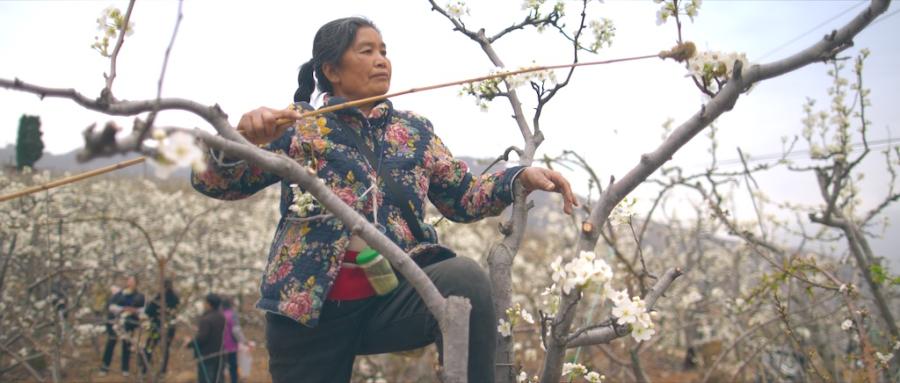
First we are shown the unintended consequences of some “clever” ideas. It’s spring in China and, in the largest pear orchard on earth, the trees are in bloom. Thousands of bees should be taking pollen from tree to tree, but pesticides introduced in the 1980s killed them all so, in their place, an army of people dusts the flowers by hand with harvested pollen (pictured above). Instead of reintroducing the bees, canny farmers are starting to use drones to do the laborious job. And given that 75 per cent of all our crops require bees to pollinate them, this doesn’t seem like a wise solution.
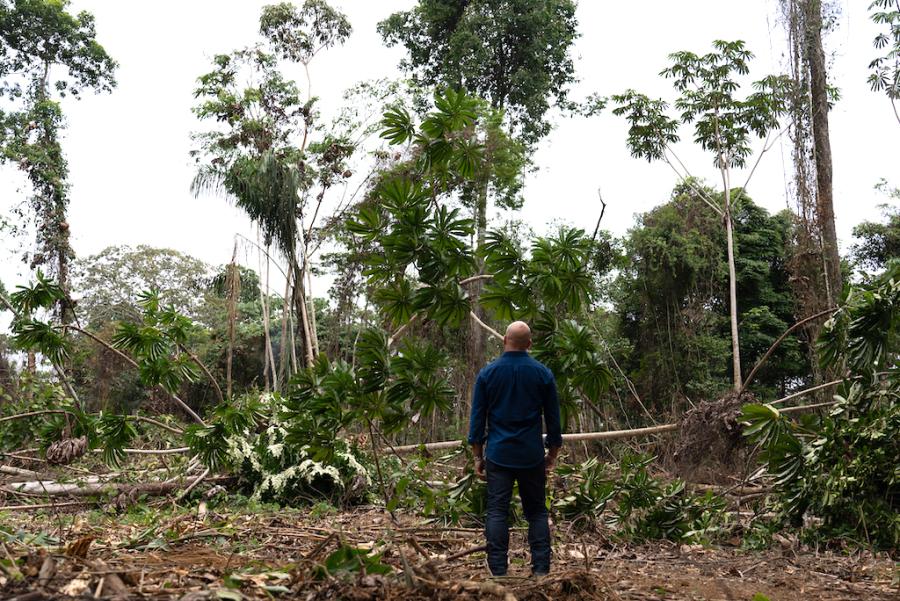
Like many before him, a farmer in Brazil is chopping down 90 hectares of Amazon rainforest to raise cattle (pictured above). Collectively we’ve cleared an area the size of North and South America combined to make way for livestock and our appetite for meat is so great that, by weight, our cattle, pigs, goats, sheep and pets make up 90 per cent of all mammals on earth. That means the lions, tigers, leopards, jaguars, pumas, rhinos, elephants, giraffes, bears, wildebeest, deer etc have been reduced to a paltry 5 per cent of the whole.
The trouble is that these majestic animals are not optional extras – good for tourism and trophy hunting – but are an essential part of the ecosystem. Elephants maintain the health of the African savannah, for instance, by keeping waterholes open and clearing the bush so the grass can grow and sequester tons of carbon. Killing them off, therefore, is environmental suicide.
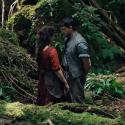
Dan O’Neill (main picture) spends his time in the rainforest recording the interdependence of everything that lives there. As a result of biologists like him we’ve come to realise that when you lose one species, the whole ecosystem suffers – including us. The message is loud and clear. Everything on earth is interdependent and until we start to recognise this fact, we’ll continue to make disastrous mistakes.
The problem, says economist Ralph Chami, is money: “living nature is invisible to the market system. What’s visible is dead nature.” The example he gives is of a tree whose value is measured only in terms of timber – after it has been cut down. “That’s why nature is dying.”
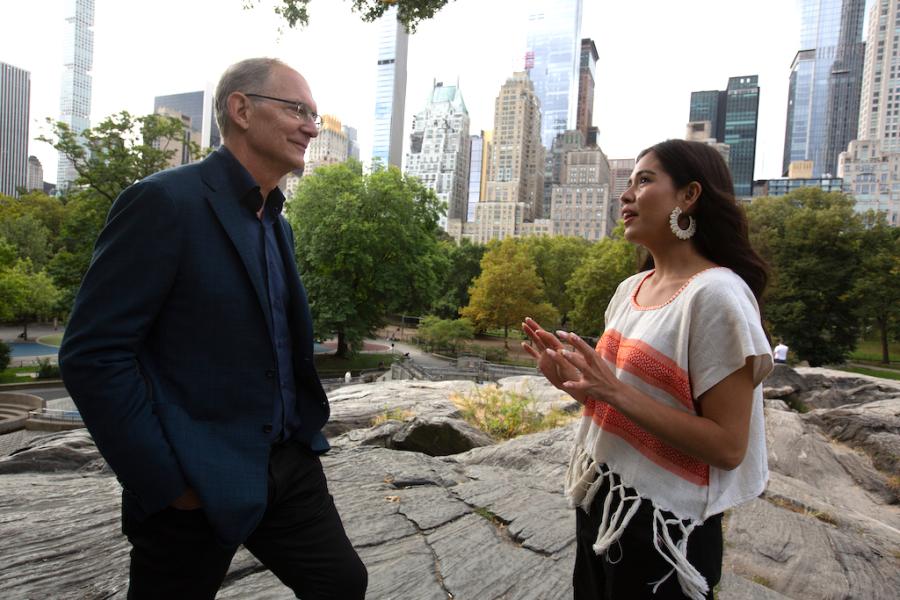
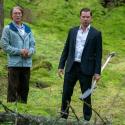
Economist Douglas Eger (pictured above with climate activist Xiye Bastida) reckons that “a hundred trillion dollars worth of goods and services a year are provided globally by nature in the form of fresh water, pollination, flood risk reduction and soil fertility.” The exciting news is that he is pioneering a way of valuing ecosystems and setting up companies that investors can buy shares in.
Looking after nature will soon be profitable. “Green is the new gold”, declares Cumberbatch (pictured below). “People who own land full of nature will become the richest people on earth, because biodiversity is bankable.” And because alternatives to meat and dairy are on the way, plenty of land will become available for re-wilding.
Sy Kass, former White House chef, visits Greg Baxtrom, a Michelin star chef who is already replacing eggs, milk and butter with Solein, an air protein produced from microbes grown in tanks, without sacrificing flavour. He is also experimenting with mycelium as a substitute for meat. To produce a steak from a cow takes 480 days and several acres, while its fungal equivalent takes 11 days and a tank. Both agree, though, that the taste and texture need improving.
So what about our health ? By 2050, seventy per cent of people are forecast to live in cities yet access to nature is vital for our well being. In South Korea the rates of depression, infertility and suicide are so high that government funds are being channelled into programmes allowing stressed youngsters to spend time in the woods with forest healer, Hyun-soo Park.
If he stays in a city for too long, biologist Dan O’Neill gets depressed; but a trip to Singapore blows him away. The airport resembles a rain forest complete with a waterfall and, in town, trees are growing everywhere – on balconies, rooftops, bridges and pavements. He sits beside a stream and a family of otters scampers by before plunging back into the clean water. “It doesn’t feel like you’re losing anything,” he enthuses. “It doesn’t feel like a compromise; it just feels good! Why isn’t everyone doing it?”
It’s a question that could be asked of all the initiatives explored in this uplifting film. And if Benedict Cumberbatch is right, soon everyone will be doing it. “We’ve got a new role,” he declares. “We’re global gardeners, planetary stewards – the captains of space ship earth... Are we wise enough?” he asks. And after a moment of Hamlet-like introspection, replies “Almost. Yeah, almost !”








Add comment