

While revered and respected, Beethoven’s Missa Solemnis has never inspired audiences with the same affection as Bach’s B minor Mass, Haydn’s Nelson Mass, or even Mozart’s Coronation or C minor settings. Perhaps it’s the austerity, the monumentality of the work Beethoven knew to be his greatest that rejects the easy assimilation into secular concert life, perhaps it’s more simply the lack of big tunes to wash down all that liturgy. Furtwängler famously drew back from the work’s sacred challenges as he grew older, but Sir Colin Davis is evidently determined to keep tackling a work whose performance he has likened to “failing to reach the top of Mount Everest”.
If last night’s performance was indeed a failure then it was one of singular ambition and scope – an interpretation that bears the wisdom-scars of Davis’s many decades of exploration. Just as his previous Proms appearance with the Gustav Mahler Jugendorchester was marked by quiet precision, so here it was clear that Davis knew exactly what he wanted from his forces, even if they occasionally fell a little short of his vision.
The thoughtful radiance of the opening orchestral gambit was gilded by the first choral entry, a plosive fire of energy from the combined forces of the London Symphony Chorus (pictured below) and the London Philharmonic Choir. This protracted Kyrie requires the impetus of the opening plea to carry this single thought through some 10 minutes of development to culminate in the obsessive chanting repetitions that bring the chorus parts to a close. Here Davis’s choral forces guided the audience carefully through the many faces of intercession Beethoven exposes, gaining our trust before mercilessly flinging us aside for the ensemble virtuosity of the Gloria.
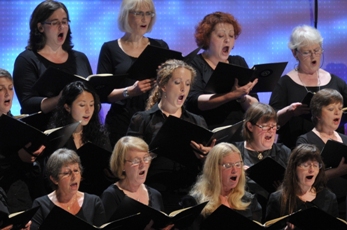 The difficulties of this high-lying work are immense for the chorus, and if the tenors occasionally sounded a little rustic (their initial “glorificamus” prefigured an extraordinary and somewhat previous bellow at “et resurrexit”) then their bravery and willingness to hurl themselves off musical precipices for Davis couldn’t be faulted. The sopranos by contrast delivered a cossetted and caressed “qui propter nos homines” in the Credo that was the tender equal of McCreesh’s youthful choruses in Elijah, and the full ensemble pianissimo at “et vitam venturi” had the intensity that no chamber group can achieve.
Moving in and out of the choral and instrumental textures, Beethoven’s quartet of soloists are unusually embedded into the Mass. Sarah Connolly, absolute mistress of her vocal colourings, brought her very sternest, most Germanic delivery to the performance, warming her tone just enough to hint at the hope of redemption that Beethoven himself never fully embraces. Soprano Helena Juntunen, by contrast, was all operatic languor – a beautiful technical performance, but perhaps just a little too Italianate at times for absolute musical (and emotional) authenticity.
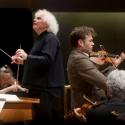
I struggled to resolve Paul Groves’s rather whiny tenor contributions with the more generous tones of the other three, and his tension was shared by leader Gordan Nikolitch’s violin solo (why standing?) in the Benedictus, whose nerves seemed to ground this most spiritually affirming of Beethoven’s movements in human frailty.
With the anniversary of 9/11 approaching and events in Libya daily coloured with further details of horror, Beethoven’s Mass – military echoes of war never long absent – has a topical urgency that wasn’t lost in Davis’s closing. Balancing the spat violence of the chorus’s Agnus Dei with the whimpering, cringing hope of the repetitions “pacem, pacem”, the musicians left us uncertain of our fate – a people still praying for the benediction of a deity whose existence we deny.



Add comment