Major change is afoot at the Liverpool Philharmonic. The new season has just opened as Philharmonic Hall has been undergoing a major refurbishment and earlier concerts during the autumn were held in the gargantuan acoustics of both cathedrals, where hearing the work being performed is difficult and where comfort for the listener comes at a premium.
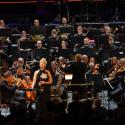
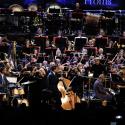
Work is still ongoing at the hall, with a new performance space and bar area due for completion in summer 2015 – coinciding with the 175th anniversary of the Philharmonic Society. Cosmetic changes have made the hall a much brighter place but the big change for concert-goers is that the stage has been revamped, with most of the orchestra performing square-on, rather than in the rather introspective semi-circular formation.
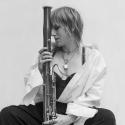
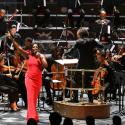
The anniversary season is seeing a number of world premieres scheduled and the opening concert, given by the Royal Liverpool Philharmonic Orchestra under chief conductor Vasily Petrenko, included the first performance of the American composer James Horner’s Pas de Deux. This is a relatively long concerto – it’s 27 minutes – scored for violin, cello and orchestra. The piece was commissioned by the soloists, brother and sister duo Mari and Håkon Samuelsen, with support from the Tom Wilhelmsen Foundation.
The audience loved it, many giving the piece a standing ovationHorner is best known for his film scores, with music for Titanic and Avatar amongst his extensive catalogue. Pas de Deux required a big orchestra – two pianos, two harps and no fewer than seven horns. But did it work? It certainly had its attractions, mainly as a rhapsody reminiscent of Vaughan Williams, Holst or early Britten. Its opening was hypnotic, mesmerising almost, until a great crash moved the work into new, livelier territory. The soloists were intertwined with the orchestra and there were no showy cadenzas or passages of musical bravado. What the work failed to do was develop. There was precious little modulation and the same formulas were worked to death. Over a nearly half-hour span, that was hard going. But the audience loved it, many giving the piece a standing ovation. It looks like there’s every chance it could be programmed again, which is not something that always happens to every new piece which gets an airing.
The concert opened with Debussy’s "Ibéria" from Images. This was the point at which the hall’s acoustic, always warm and forgiving, showed something of a change. The fact that the choir seats have been removed and replaced with an attractive wooden surface meant that the acoustic felt sharper, clearer and that bit less forgiving.
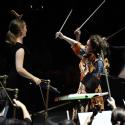
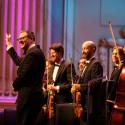
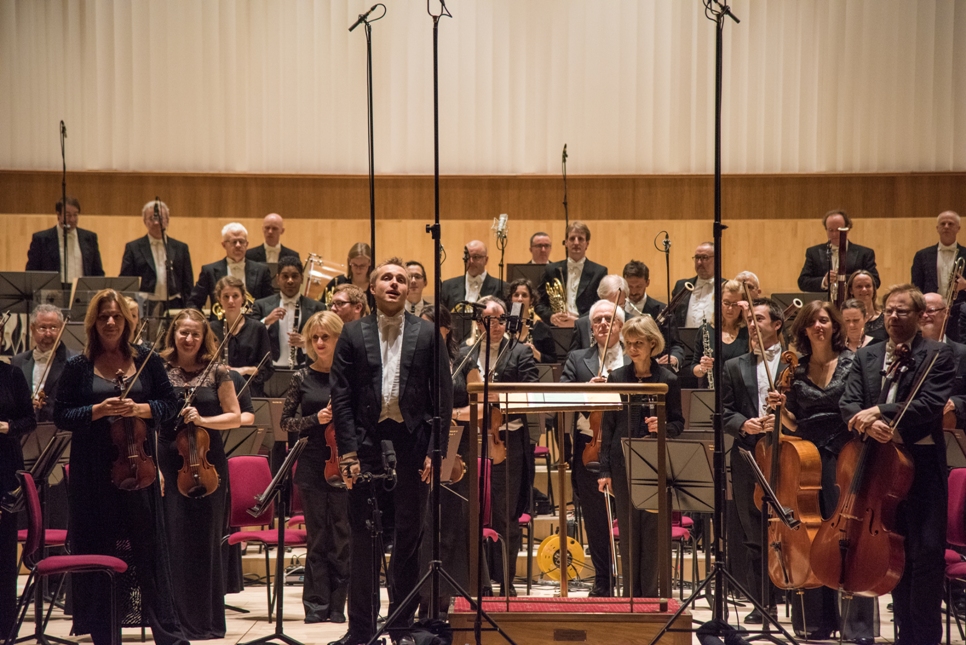 As a result, every nuance in Petrenko’s interpretation of the Debussy was apparent (the conductor taking a bow right). The first movement was incredibly rhythmic though he did pull the tempi around at times, allowing the performance to become almost a little brash at some points. A ghostly second movement could have benefited from taking the dynamics down a notch while the finale burst into action in what was a rather frantic dash to the finishing line.
The final work in the concert was a performance of Tchaikovsky’s Fifth Symphony, the start of the RLPO’s overview of Tchaikovsky’s symphonies over the next season. The ponderous, introspective start soon burst into a performance which was as vivacious as Petrenko dared to push it. The shapely second movement, slightly marred by some inaccurate playing from the horn solo, yielded to an elegant waltz and a finale which barely paused for breath.